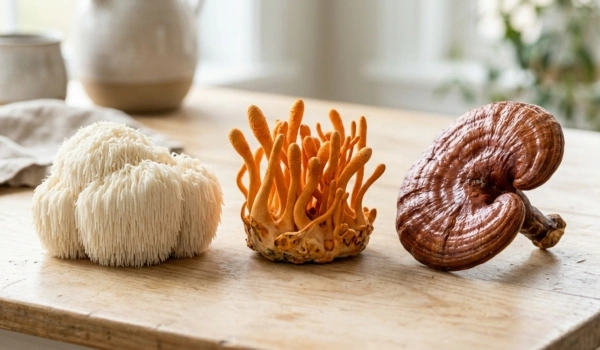
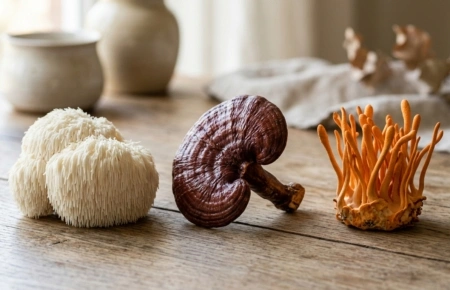
Which functional mushroom fits which wellness goal? Lion’s mane is the strongest research-supported option for anxiety, depression, and focus. Reishi is the primary choice for sleep and stress regulation. Cordyceps leads for physical energy and exercise performance. This guide maps each goal directly to the mushroom with the most relevant evidence and explains the mechanism behind each match.
What Are Functional Mushrooms and How Do They Differ from Psychedelic Mushrooms
Functional mushrooms — including lion’s mane, reishi, cordyceps, chaga, and turkey tail — are food-grade or supplement-grade species used for general wellness support. They are classified as dietary supplements, not medications, and they contain no psilocybin, muscimol, or any psychoactive compound. They are entirely different from magic mushrooms, psilocybin mushrooms, or Amanita muscaria, which belong to separate botanical and legal categories with different mechanisms, risks, and regulatory status.
People use functional mushrooms because of specific bioactive compounds — primarily beta-glucans, triterpenoids, and in the case of lion’s mane, hericenones and erinacines — that appear to influence brain health, immune function, and stress regulation. Historically, Buddhist monks consumed certain mushroom preparations before meditation to support mental clarity and emotional calm. Today, that same interest in cognitive and mood support drives most functional mushroom supplement use.
Because these mushrooms are supplements rather than pharmaceuticals, the evidence base varies. Some have small but well-designed human clinical trials; others rely more on animal research or traditional use. The sections below note the study type so you can judge the strength of each claim.
Best Mushrooms for Anxiety and Depression
Lion’s mane (Hericium erinaceus) is the most research-supported functional mushroom for anxiety and depression. Its mechanism centers on nerve growth factor (NGF) stimulation: compounds in lion’s mane — particularly hericenones and erinacines — cross the blood-brain barrier and promote the growth and repair of nerve cells. This supports neuroplasticity, the brain’s ability to adapt and reorganize, which is closely linked to emotional regulation and mood stability.
A randomized, double-blind, placebo-controlled trial found that women who consumed 2g per day of lion’s mane for four weeks showed statistically significant reductions in depressive symptoms. The trial also found trends toward better concentration, reduced irritability, and lower anxiety scores. This is one of the more rigorous study designs available in functional mushroom research, which makes the finding meaningful — though it involved one specific population over a short timeframe.
An eight-week open-label study on overweight and obese adults found improvements in anxiety, depression, and sleep measures after lion’s mane extract supplementation. Open-label studies carry less certainty than double-blind trials, but they add to the picture of lion’s mane as broadly relevant to mood support.
Reishi (Ganoderma lucidum) approaches anxiety through a different pathway. Reishi contains triterpenoids that appear to regulate the hypothalamic-pituitary-adrenal (HPA) axis — the hormonal system that controls the body’s stress response. When the HPA axis is chronically overactivated, cortisol levels stay elevated and anxiety symptoms can worsen. Reishi may help moderate this response. Reishi also appears to support GABA pathways, the brain’s primary inhibitory system and the same mechanism targeted by many prescription anxiolytics.
Studies have shown reishi may reduce anxiety symptoms and lower cortisol levels over time. The research base for reishi in mood disorders is less developed than lion’s mane’s, but the mechanism is grounded in known neurobiology. Reishi is often positioned as a calming, adaptogenic complement to lion’s mane’s more cognitively active profile.
Population-level data suggests mushroom consumption in general is linked to lower odds of mood disorders, and depression and anxiety frequently co-occur — which is why both lion’s mane and reishi are relevant to both goals. Neither mushroom is an FDA-approved treatment for any mental health condition. These are supplements, and they work best as one part of a broader wellness approach that may include therapy, lifestyle changes, and professional medical guidance.
Best Mushrooms for Focus and Creativity
Lion’s mane is the leading functional mushroom for focus and cognitive performance, and the mechanism is the same one relevant to mood: NGF stimulation and neuroplasticity. When the brain can form and strengthen neural connections more readily, cognitive tasks — attention, processing speed, working memory — may become more fluid. This is why lion’s mane is often described as supporting conditions for clearer, sharper thinking rather than directly stimulating the brain the way caffeine does.
The double-blind trial referenced in the anxiety section showed trends toward better concentration alongside its mood findings, which suggests the focus-related effects and the anxiety-reducing effects may be connected through the same neurological pathway. Better emotional regulation often supports better sustained attention — the two are not separate systems.
The historical use of mushrooms by Buddhist monks before meditation reflects a traditional understanding of this relationship: a calmer, less distracted mind creates space for focused and creative thinking. This is cultural background, not clinical proof, but it aligns with what the NGF research suggests about lion’s mane’s mechanism.
Creativity specifically is difficult to measure in clinical trials, and no functional mushroom has been shown to directly produce creative states. What lion’s mane may support is the cognitive groundwork — reduced mental fatigue, better concentration, and improved mood — that makes creative thinking more accessible. Users often describe this as mental clarity rather than stimulation. Cordyceps, primarily known for physical energy, may also contribute to mental readiness by supporting oxygen utilization and reducing fatigue, which can make sustained cognitive work feel easier.
Best Mushrooms for Sleep
Reishi is the primary functional mushroom associated with sleep quality. Its sleep-relevant effects come from the same pathways relevant to anxiety: HPA axis regulation and GABA support. When cortisol levels are elevated at night, falling asleep and staying asleep becomes harder. Reishi’s triterpenoids appear to help moderate the stress response over time, which may allow the body’s natural sleep mechanisms to function more effectively.
GABA is the main inhibitory neurotransmitter in the brain — it slows neural activity and creates the calm state necessary for sleep onset. Reishi’s influence on GABA pathways may explain why studies have found reishi supplementation associated with reductions in anxiety and better sleep, often in the same participants. Lower nighttime anxiety is one of the most reliable paths to improved sleep quality, and reishi addresses both simultaneously.
The eight-week open-label lion’s mane study also reported improvements in sleep measures, which positions lion’s mane as a secondary option worth considering. The mechanism here is less direct — lion’s mane likely improves sleep through mood and anxiety reduction rather than direct sleep-pathway involvement.
Reishi is typically positioned as an evening supplement, taken before bed rather than in the morning, because of its calming rather than activating profile. If sleep disorders are serious or long-standing, a healthcare provider should be consulted before relying on supplement support alone.
Best Mushrooms for Energy
Physical energy and mental energy involve different mechanisms, and different mushrooms address each one.
Cordyceps is the primary functional mushroom for physical energy and exercise performance. Early human studies suggest cordyceps can support exercise performance metrics — likely through improving oxygen utilization and ATP production at the cellular level. Cordyceps is relevant for endurance, workout capacity, and recovery from physical exertion. Its profile resembles a performance-support supplement rather than a stimulant: cordyceps appears to improve how efficiently the body uses available energy rather than artificially spiking it.
Lion’s mane addresses mental energy — specifically focus and processing speed. Users looking for sharper cognitive performance, reduced mental fog, or better sustained attention through a workday typically find lion’s mane more relevant than cordyceps for this purpose. The distinction matters: lion’s mane will not improve a 5km run time, and cordyceps is not the primary tool for sharpening reading comprehension.
Reishi contributes to energy outcomes indirectly. Reishi itself is not an energizing mushroom — its profile is calming. But because reishi may improve sleep quality and reduce nighttime cortisol, the downstream effect is often better daytime energy and lower perceived fatigue. Poor sleep is one of the most common drivers of daytime energy loss, and addressing it through reishi’s mechanisms can make a practical difference without any stimulant effect.
How to Take Functional Mushroom Supplements and Who Should Be Cautious
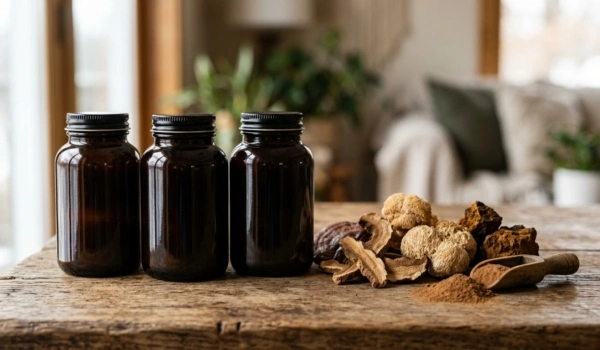
Functional mushroom supplements come in several forms: capsules, powders, liquid extracts (tinctures), and standardized extract blends. Each form has practical differences worth understanding before buying.
| Mushroom | Primary Wellness Goal | Common Supplement Forms | Key Caution Note |
|---|---|---|---|
| Lion’s mane (Hericium erinaceus) | Anxiety, depression, focus, cognitive support | Capsules, powder, dual-extract tincture | May interact with blood-thinning medications; avoid if allergic to mushrooms |
| Reishi (Ganoderma lucidum) | Sleep, stress, anxiety, HPA axis regulation | Capsules, powder, concentrated extract, tincture | May interact with immunosuppressants and anticoagulants; not recommended during pregnancy |
| Cordyceps (Cordyceps militaris or sinensis) | Physical energy, exercise performance | Capsules, powder, extract | Limited long-term human data; consult a provider if managing a chronic health condition |
| Chaga (Inonotus obliquus) | Secondary: stress support, antioxidant profile | Powder, tincture, tea | High oxalate content; caution if prone to kidney stones or on anticoagulants |
Reading a Functional Mushroom Label
The most important label distinction is whole mushroom powder vs. extract. Extracts are concentrated and more likely to contain meaningful amounts of active compounds — beta-glucans and, in lion’s mane, hericenones. Whole powder can be less concentrated and harder for the body to process, depending on preparation. Look for products that specify the extraction method (hot water, dual extraction) and ideally list beta-glucan percentage or active compound standardization.
Serving size varies widely across products. The double-blind lion’s mane trial used 2g per day — useful as a reference point when reading labels, not as a universal personal target. Some products deliver 500mg per capsule; others provide 1g or more. Third-party testing or certification (such as NSF, USP, or Informed Sport) is a meaningful quality marker because functional mushroom supplements are not FDA-regulated for efficacy — it indicates that what is on the label is actually in the product.
Who Should Consult a Healthcare Provider Before Use
- Individuals taking immunosuppressant medications — reishi and some other mushrooms may affect immune activity
- Individuals on blood thinners or anticoagulants — lion’s mane and reishi may have mild antiplatelet effects
- Pregnant or breastfeeding individuals — safety data in these populations is insufficient
- People with known mushroom or mold allergies
- Individuals managing serious mental health conditions, including those on antidepressants or anxiolytics — interactions are not well-studied
- Anyone with a chronic health condition or scheduled surgery
Functional mushroom supplements are not replacements for professional mental health treatment, medication, or medical advice. They may complement a broader wellness approach, but that approach should be shaped with qualified guidance when any of the above apply.
Common Questions About Functional Mushrooms
Can you take lion’s mane and reishi together?
Combining lion’s mane and reishi is a common practice in functional mushroom supplementation and there is no known interaction between the two. They target different mechanisms — lion’s mane works primarily through NGF stimulation and neuroplasticity; reishi works through HPA axis regulation and GABA pathway support — so they may complement each other for goals like anxiety reduction or general cognitive wellness. If you are new to either supplement, starting with one at a time makes it easier to observe individual effects before combining.
How long does it take to notice effects from functional mushrooms?
The double-blind lion’s mane trial that showed mood improvements used a four-week supplementation period. Most functional mushroom research measuring cognitive or mood outcomes runs for four to eight weeks, which suggests these are not fast-acting supplements. Effects from reishi on sleep and stress may be noticed sooner by some users, but consistent daily use over several weeks is typically needed before any meaningful assessment is possible.
Are functional mushrooms safe to take alongside antidepressants?
There is no robust clinical data on interactions between functional mushroom supplements and prescription antidepressants. Lion’s mane’s influence on NGF and serotonin-adjacent pathways is not fully understood in combination with SSRIs, SNRIs, or other psychiatric medications. Anyone currently using antidepressants, anxiolytics, or mood stabilizers should discuss mushroom supplement use with their prescribing clinician before starting — not as a precaution against a known danger, but because the interaction data does not yet exist.
Is there one mushroom that covers all goals at once?
Lion’s mane has the broadest research profile across anxiety, depression, focus, and sleep among functional mushrooms, which is why it appears most frequently in multi-goal wellness stacks. However, lion’s mane does not address physical energy the way cordyceps does, and its calming profile is less developed than reishi’s for sleep-specific support. A goal-matched approach — lion’s mane for cognitive and mood goals, reishi for stress and sleep, cordyceps for physical performance — tends to be more precise than expecting any single mushroom to cover everything.