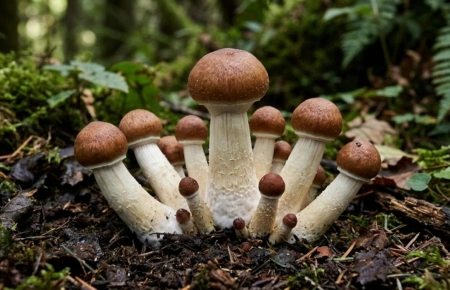
What Is the Penis Envy Mushroom?
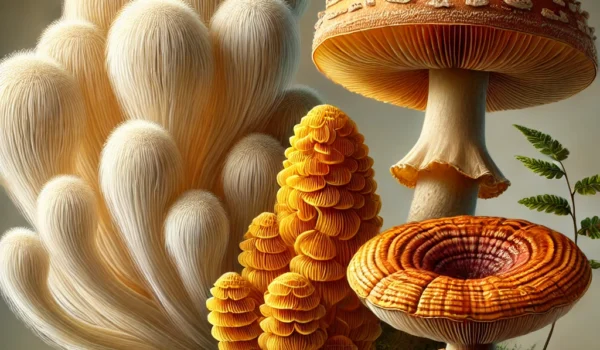
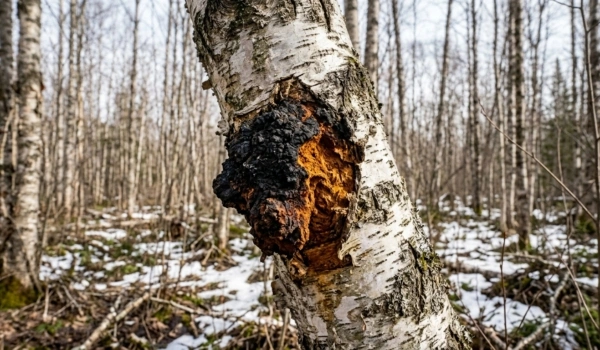
The penis envy mushroom is a cultivated strain of Psilocybe cubensis, a psilocybin-containing fungus — not a wild species, not a separate genus, and not related to functional mushrooms such as lion’s mane, reishi, or chaga. The penis envy strain is distinguished from other P. cubensis cultivars by a thick, dense stem and a small bulbous cap that rarely opens fully to a flat or convex shape the way most cubensis strains do. These morphological features are consistent enough that the strain is recognizable in peer-reviewed literature as a distinct cultivar with exceptional potency and unusual structure.
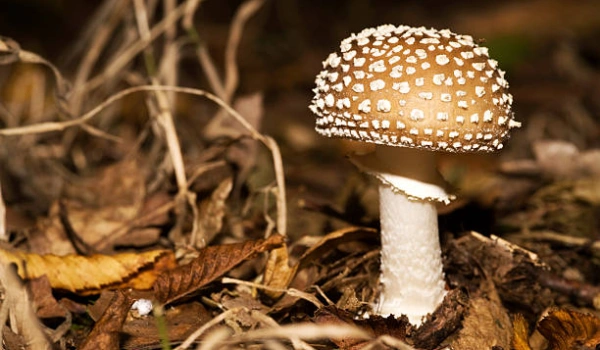
Because penis envy mushrooms are propagated through clonal cultivation rather than collected from a wild population, their characteristics are maintained deliberately. The strain belongs to the same species — Psilocybe cubensis — as commonly known cultivars such as Golden Teacher or B+, but its chemical profile sets it apart. The penis envy strain should not be confused with Amanita muscaria, which contains the entirely different active compounds muscimol and ibotenic acid and carries a distinct and separate risk profile.
Psilocybin Potency and Chemical Profile
The penis envy psilocybin strain contains approximately 1.0–1.5% psilocybin by dry weight, roughly double the concentration found in common Psilocybe cubensis cultivars. Ordinary dried P. cubensis mushrooms typically contain around 0.5–1.0% psilocybin by dry weight, meaning the penis envy mushroom potency range sits meaningfully above the cubensis average. These figures represent typical ranges from research contexts, not fixed values — intra-strain and inter-strain variability means any given sample may fall outside these ranges.
The biochemical basis for this elevated potency has a documented genomic foundation. A peer-reviewed genomic study identified a 4.6 kilobase (kb) insertion extending the 3′ end of the N-methyltransferase gene in the penis envy strain — a structural variation not detected in prior P. cubensis surveys. This insertion is a plausible molecular explanation for the strain’s elevated alkaloid output, though the precise causal mechanism is still being characterized. The same study hypothesized that a mutation in the psiK gene may produce a skewed ratio between psilocin and psilocybin in this strain, which could influence how potency is expressed.
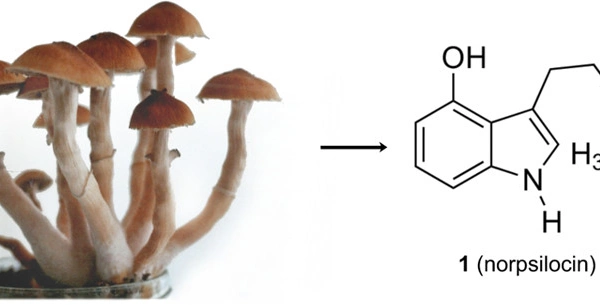
Psilocybin itself is a prodrug. After ingestion, the body converts it to psilocin through dephosphorylation. Psilocin then acts as a partial agonist at the 5-HT2A serotonin receptor — the same broad receptor mechanism shared by LSD and DMT — producing altered sensory perception, hallucinations, ego dissolution, and distorted time perception. The conversion happens primarily in the gastrointestinal tract and liver, and the resulting psilocin crosses the blood-brain barrier to produce psychedelic effects.
| Strain | Approximate Psilocybin Content (% dry weight) | Notes |
|---|---|---|
| Penis Envy | ~1.0–1.5% | Genomic insertion documented; elevated psilocin ratio hypothesized |
| Golden Teacher | ~0.5–1.0% | Common reference strain; typical cubensis range |
| Common P. cubensis average | ~0.5–1.0% | Represents most cultivated cubensis strains; variability applies |
Potency figures across all Psilocybe cubensis strains carry inherent variability. Growing conditions, substrate, harvesting timing, and storage all affect final alkaloid concentrations. The figures above reflect research-context ranges and should not be interpreted as precise or guaranteed values for any specific sample.
Origin and History of the Strain
The origin of the penis envy strain is widely attributed to ethnobotanist and writer Terence McKenna, with the story tracing back to the early 1970s — though this attribution is anecdotal and has not been scientifically verified. According to the widely circulated account, McKenna collected an unusually large Psilocybe cubensis specimen during a trip to the Amazon region, selecting it for its atypical morphology and apparent potency. A towering fruiting body with a pale cap and an absent partial veil reportedly distinguished this specimen from standard Amazonian P. cubensis populations.
The penis envy phenotype is described as having emerged from this Amazonian P. cubensis accession and was subsequently preserved through clonal propagation — reproducing the mushroom from tissue cultures or spore prints rather than allowing standard sexual recombination. Clonal propagation helps maintain the distinctive morphological and chemical characteristics across generations, which is why the strain has remained recognizable for decades despite spreading informally through cultivation communities.
The limited formal scientific documentation of penis envy strain history is largely a consequence of regulatory environment. Researchers have noted that nearly four decades of restrictions on psychedelic research constrained strain-level scientific documentation of P. cubensis varieties, including penis envy, leaving much of the early history dependent on anecdotal accounts from the cultivation community rather than formal records.
Known Penis Envy Variants
Several distinct variants of the penis envy strain have been developed through selective cultivation, all sharing the elevated psilocybin content characteristic of the original penis envy mushroom lineage.
- Albino Penis Envy (APE): A fully leucistic variant with white to pale blue coloring across the cap and stem. APE is often cited as among the most potent penis envy variants and produces smaller fruiting bodies than the standard strain.
- Penis Envy Uncut (PEU): Named for a cap that remains attached to the stem even at full maturity — the veil does not separate — giving the fruiting body an even more closed, cylindrical appearance than standard penis envy mushrooms.
- Trans Envy (TE): A cross between the penis envy strain and the South African Transkei cubensis cultivar. Trans Envy typically has a somewhat thinner stem and a cap that opens more fully, while retaining above-average psilocybin levels.
- Penis Envy #6 (PE6): A hybrid variant generally considered slightly more productive than the original, while maintaining elevated psilocybin content relative to common cubensis strains.
Each variant retains the defining characteristic of elevated psilocybin content relative to average Psilocybe cubensis strains. Morphological differences between variants are mainly relevant to identification — the chemical potency distinction from common cubensis cultivars applies across the penis envy lineage.
Effects and Why Potency Matters
The psychedelic effects associated with the penis envy psilocybin strain follow the same pharmacological pathway as other psilocybin-containing mushrooms — but the elevated concentration of psilocybin and the hypothesized skewed psilocin ratio make the practical experience meaningfully different from that of common cubensis strains.
Psilocin’s partial agonism at the 5-HT2A serotonin receptor produces the characteristic effects reported with psilocybin mushrooms: visual and auditory hallucinations, dissolution of the sense of a bounded self (ego dissolution), significant distortion of time perception, and intense shifts in emotional tone. These effects are consistent whether the source is a common P. cubensis strain or penis envy mushrooms — the pharmacological mechanism is the same. What differs is the potency context.
The penis envy mushroom potency — approximately 50 to 100 percent higher than ordinary Psilocybe cubensis concentrations — means that the same physical quantity of material delivers a substantially larger effective dose compared to a common strain. Early research and clinician-reviewed reporting consistently note that the intensity and unpredictability of effects increase with psilocybin concentration, making the elevated potency of the penis envy strain a relevant safety variable rather than simply a point of curiosity.
Risks, Drug Interactions, and Legal Status
The penis envy mushroom carries specific psychiatric and pharmacological risks that are directly relevant to anyone with a personal or family medical history, or who takes prescription medications.
People with a personal or family history of schizophrenia, bipolar disorder, or severe anxiety disorders are at elevated risk of acute psychiatric harm from psilocybin-containing mushrooms, including penis envy. Psilocin’s 5-HT2A receptor activity can amplify or destabilize existing vulnerabilities in serotonin-linked neural circuits. The high potency of the penis envy strain relative to common cubensis cultivars makes this risk more pronounced — the probability of an overwhelming or psychosis-adjacent experience is higher when psilocybin concentrations are elevated.
Drug interactions with psilocybin-containing mushrooms include several serious categories:
- MAOIs (monoamine oxidase inhibitors): Combining psilocybin with MAOIs — which include certain antidepressants — can dramatically increase psilocin blood levels and unpredictably intensify effects.
- Lithium: Concurrent use of lithium and psilocybin has been associated with seizure risk and other serious adverse events in case reports.
- Serotonergic drugs: Combining psilocybin with SSRIs, SNRIs, or other serotonergic substances raises the risk of serotonin syndrome, a potentially life-threatening condition characterized by agitation, hyperthermia, rapid heart rate, and neuromuscular instability.
Anyone currently taking psychiatric medications, mood stabilizers, or serotonin-affecting drugs should consult a qualified medical professional before any exposure to psilocybin-containing substances. This article does not replace medical or legal advice.
Psilocybin is classified as a Schedule I controlled substance in the United States under federal law, meaning it is considered to have no currently accepted medical use and a high potential for abuse under that regulatory framework. Penis envy mushrooms contain psilocybin and are therefore subject to this classification. Psilocybin is also illegal in the majority of other jurisdictions globally, though a small number of localities have moved toward decriminalization or regulated therapeutic access. Clinician-reviewed sources confirm that legal risks remain substantial in most parts of the world.
Anyone with relevant psychiatric history, current medication use, or questions about legal status in their specific jurisdiction should seek guidance from a qualified medical or legal professional rather than relying on general educational content.