Amazing Hericium: appearance and names
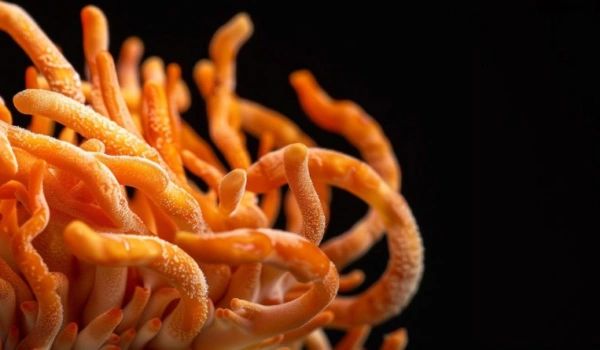
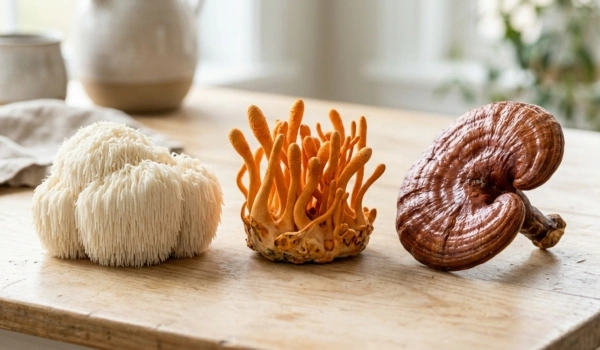
Hericium erinaceus (Hericium erinaceus), or Hericium, has long attracted the attention of scientists and mushroom lovers with its unusual appearance and valuable medicinal properties. This mushroom, resembling a cascade of white threads, has received many folk names: lion’s mane, monkey’s head, old man’s beard, hedgehog mushroom, Pom-Pom and others. In Japan it is known as Yamabushitake (Yamabushitake), due to the image of the hermit monks of the Shugendo sect, whose clothing resembles the shape of the mushroom. In China, he is called Shishigashira, the lion’s head, or Houtou, the baby monkey.
The mushroom varies in size from 5 to 40 cm and grows on the dead wood of deciduous trees: oak, walnut, maple, beech and sycamore. Its main production is concentrated in China, where it is considered a valuable product and is cultivated on an industrial scale.

Scientific research and anti-tumor properties
Gericium has been the subject of much research due to its unique therapeutic properties. Scientists from the Institute of Traditional Chinese Medicine (Hangzhou, China) discovered that the polysaccharides of this mushroom activate T- and B-lymphocytes, which are responsible for destroying cancer cells, bacteria, viruses and fungi. In their experiment, the growth of lymphocytes doubled and their total number tripled.

Domestic scientists also investigated the antitumor effect of Hericium. During the experiments, laboratory animals with tumors of T-lymphoma EL-4 and T-cell lympholeukemia P388 were administered an aqueous extract of the mushroom. As a result, inhibition of tumor growth and increased survival rate of animals were recorded: on the 19th day of the experiment, 70% of mice in the experimental group survived against 30% in the control group.
Additional studies were conducted by specialists from Gangwon University (South Korea). They studied the effect of aqueous and alcoholic extracts of the mushroom and found that the active substances of Hericium stimulate macrophages, increasing the synthesis of nitric oxide and the expression of cytokines IL-1 and TNF-alpha – important elements of the immune response.
Japanese scientists from Kyoritsu Pharmaceutical Industry Co. conducted another interesting experiment: laboratory mice were transplanted with sarcoma and fed with Hericium extract for 14 days. As a result, the tumors either stopped growing or shrank significantly. It was found that the mushroom does not act directly, but by strengthening the immune system.
In Ukraine, the anti-tumor properties of Hericium were studied by Natalia Poedinok from the N.G. Kholodny Institute of Botany of the National Academy of Sciences of Ukraine. In her paper “Therapeutic properties of Hericium spicum and prospects for its use in biotechnology and medicine” she described the potential of this mushroom in the fight against cancer.

Hericium in clinical practice
Following the research of Dr. Takashi Mitsuno of Shizuoka University (Japan), the development of standardized extracts of the mushroom began. Zhejiang Fange Pharmaceutical Co. created such extracts, which were clinically tested in oncology clinics in China. The results were impressive:
- Reducing tumor size in esophageal, stomach, and liver cancers;
- compatibility with chemotherapy and radiation therapy;
- The most powerful effect on pancreatic cancer, which is difficult to treat with standard treatments.
These data confirm the prospectivity of Hericium in the complex therapy of oncologic diseases.

The first researcher of its properties was Dr. Takashi Mizuno of Shizuoka University in Japan, who wrote an article in the International Journal of Medicinal Mushrooms on the antitumor properties of this mushroom (Hericium)
Useful properties and application
Gericium is rich in beta-glucans and other polysaccharides, making it a powerful immunomodulator. Doctors prescribe it both in addition to chemotherapy and radiation, and as monotherapy when standard treatments cannot be used.
The mushroom extract is used in:
- Treatment and prevention of malignant and benign tumors;
- Supporting the body before and after chemotherapy;
- Alzheimer’s disease treatment because it stimulates the production of nerve growth factor (NGF), which is necessary for neuronal regeneration.
In traditional Chinese medicine, Hericium is prescribed for gastritis, gastric and duodenal ulcers and as a styptic. It helps with neurasthenia, insomnia, impotence, liver diseases and bronchitis, stimulates digestion and improves metabolism.
Interestingly, this mushroom is not only medicinal, but also a gastronomic product. Its flavor is reminiscent of crab or lobster, so it can be found on the menus of gourmet restaurants.
Sources:
- Therapeutic properties of Gericium spiny and prospects for its use in biotechnology and medicine Uspekhi meditsinskikh mykologii. 2005. – VOL. 5 – P. 276-278. Duel N.L .
- Development of special medical products based on edible and medicinal mushrooms
- Lion’s mane mushroom: A comprehensive review of its neuroprotective, anti-inflammatory and health-promoting properties “Zhejiang Fange Pharmaceutical Co. “