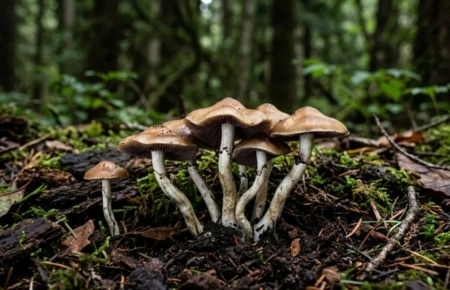
What Are Psilocybin Mushrooms?
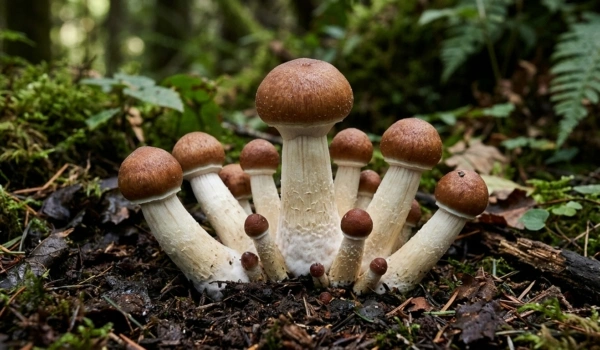
Psilocybin mushrooms are fungi that contain psilocybin, a naturally occurring psychoactive compound that produces significant alterations in perception, thought, and mood. They belong primarily to the Psilocybe genus, which includes several hundred species distributed across multiple continents. When psilocybin enters the body, it is rapidly converted to psilocin — a potent serotonin 5-HT2A receptor agonist that acts on the brain to produce the characteristic psychedelic effects commonly associated with magic mushrooms. This prodrug-to-active-compound conversion is central to understanding how psilocybin works at a pharmacological level.
Psilocin’s action on 5-HT2A receptors — found densely in the prefrontal cortex and other regions involved in perception and cognition — disrupts ordinary patterns of brain activity and connectivity. The result can include visual and auditory distortions, altered sense of time, and shifts in emotional processing. The intensity and character of these effects depend on the dose, the individual’s psychology, and the setting in which psilocybin is taken.
Psilocybin mushrooms are entirely distinct from functional mushrooms such as lion’s mane, reishi, chaga, cordyceps, turkey tail, and maitake — which contain no psilocybin or psilocin, are not psychoactive, and are sold legally as dietary supplements. Psilocybin mushrooms are also categorically different from Amanita muscaria, whose primary active compound is muscimol. Muscimol acts on GABA receptors rather than serotonin receptors and carries a different and in some respects more unpredictable risk profile. Conflating these categories leads to significant misunderstanding of both the science and the legal situation.
Therapeutic Research and FDA Status
The FDA has granted Breakthrough Therapy designation to psilocybin for both treatment-resistant depression and major depressive disorder — a designation that accelerates development and review of promising investigational therapies, but is not approval. Phase 3 clinical trials are currently ongoing. This is the most significant regulatory signal to date that psilocybin research has moved well beyond early feasibility stages.
The range of conditions being studied in clinical settings extends beyond depression. Active research programs are examining psilocybin’s potential in:
- Treatment-resistant depression and major depressive disorder
- Anxiety disorders, including end-of-life existential anxiety in cancer patients
- Alcohol use disorder and other substance use conditions
- Obsessive-compulsive disorder (OCD)
- Psychological distress associated with life-threatening illness
Several published trials have reported meaningful reductions in depression scores following one or two supervised psilocybin sessions, with effects persisting for weeks or months in some participants. Studies from institutions including Johns Hopkins University and Imperial College London helped establish the credibility of this research area and supported the pathway to FDA designation. These remain clinical trial findings — not the results of approved or commercially available treatments.
The Breakthrough Therapy designation means the FDA recognized that preliminary clinical evidence suggests psilocybin may offer substantial improvement over existing therapies for these serious conditions. It does not mean psilocybin has been proven safe and effective as a medicine, and it does not authorize use outside of approved research contexts. Psilocybin remains an investigational substance. The outcome of Phase 3 trials will determine whether a formal approval application is viable.
All clinical research to date has been conducted under carefully controlled conditions — with screened participants, professional therapeutic support before and during sessions, and structured follow-up. Results from these settings cannot be directly extrapolated to unsupervised use.
Safety Profile: What the Evidence Shows
Psilocybin administered in controlled clinical settings shows low physiological toxicity and low addiction potential. Serious adverse events have been rare and generally short-lasting in research contexts, and peer-reviewed harm-profile research consistently places magic mushrooms among the substances with the least harm to the individual and to society when compared across a range of psychoactive compounds.
“Psilocybin mushrooms are confirmed to be a relatively safe substance, with serious adverse incidents being rare and short-lasting. Providing harm-reduction information is identified as a key factor in preventing adverse effects.” — Published peer-reviewed analysis, PMC9353971
A low harm profile in research settings is not the same as being risk-free in practice. Several important risks and contraindications are well documented.
Psychological risk is the primary concern. Difficult or distressing psychological experiences can occur even in supervised settings, and the risk is meaningfully higher in unsupervised contexts. For individuals with a personal or family history of psychosis, schizophrenia, or other psychosis-spectrum disorders, psilocybin poses a particular risk of precipitating or worsening psychotic symptoms. Clinical trials typically exclude these individuals for this reason.
Serotonergic medications represent a clear contraindication. Taking psilocybin alongside SSRIs, SNRIs, MAOIs, lithium, or other serotonergic drugs raises the risk of serotonin-related complications, and concurrent use can also unpredictably alter the effects of psilocybin itself. Anyone taking psychiatric medications should not combine them with psilocybin outside of medically supervised research protocols.
Pregnancy and breastfeeding: NIDA explicitly states that there is no safety data on psilocybin use during pregnancy for either the mother or the developing baby. Anyone who is pregnant, planning to become pregnant, or breastfeeding should consult a healthcare provider and should not use psilocybin.
The harm-reduction context also matters. Research consistently finds that preparation, a supportive environment, and professional guidance significantly reduce the likelihood of adverse psychological outcomes. The same substance carries a meaningfully different risk profile in a structured clinical session versus unsupervised use — particularly at higher doses or in individuals who are unprepared for the experience.
Legal Status in the US and Around the World
Psilocybin is classified as a Schedule I controlled substance by the DEA under US federal law, making possession, distribution, and manufacture illegal at the federal level regardless of state-level changes. This classification reflects a determination that psilocybin has a high potential for abuse and no currently accepted medical use under federal standards — a position that research advocates continue to contest but that remains in force.
State and local legal status is evolving. Oregon became the first US state to create a legal supervised therapeutic use framework for psilocybin, with licensed service centers permitted to offer psilocybin sessions to adults under specific regulatory conditions. Colorado followed with its own voter-approved framework for regulated therapeutic access. Several cities — including Denver, Oakland, Santa Cruz, and Washington D.C. — have decriminalized personal possession or directed law enforcement to deprioritize psilocybin-related enforcement. These local changes do not override federal law, which continues to carry real legal consequences.
Internationally, the picture is equally varied.
| Jurisdiction | Legal Status | Key Notes |
|---|---|---|
| United States (Federal) | Schedule I — Illegal | Possession, distribution, and manufacture prohibited under federal law |
| Oregon (US State) | Legal supervised therapeutic use | Licensed service centers; adults only; regulated framework |
| Colorado (US State) | Legal supervised therapeutic use | Voter-approved; regulated access for therapeutic contexts |
| Selected US Cities / DC | Decriminalized / Deprioritized | Does not override federal law; personal possession focus |
| Australia | Authorized prescription — limited | TGA-authorized psychiatrists may prescribe for treatment-resistant depression since July 2023 |
| Netherlands | Partially legal | Psilocybin-containing magic truffles are legally sold; dried mushrooms are prohibited |
| Most other countries | Controlled or prohibited | Varies significantly; verification of local law is essential |
Australia’s decision to allow TGA-authorized psychiatrists to prescribe psilocybin for treatment-resistant depression — effective July 2023 — marked a significant regulatory milestone internationally. The legal landscape continues to shift, particularly in jurisdictions where clinical research has gained political traction. Readers should verify the current law in their specific location, as changes at the state, national, or municipal level can occur without broad public notice. This article does not constitute legal advice.
Microdosing Psilocybin: What Research Currently Shows
Microdosing psilocybin refers to taking approximately 5–10% of a typical recreational dose on a regular basis — an amount generally described as sub-perceptual, meaning it does not produce obvious psychedelic effects. Despite substantial anecdotal interest, NIDA states clearly that research has not yet established that microdosing psilocybin is either safe or effective.
The gap between anecdotal reports and clinical evidence is particularly wide in this area. Online communities and self-reported surveys describe perceived benefits for mood, focus, creativity, anxiety, and depression symptoms — but self-reported data from individuals who have chosen to microdose is subject to strong placebo effects, expectation bias, and self-selection. Controlled clinical trials examining microdosing remain limited in number and have produced mixed results, with some studies finding that placebo responses account for much of the reported improvement.
Several specific claims circulate around microdosing, particularly regarding depression, anxiety, and OCD. These are the same conditions where psilocybin is being studied at full therapeutic doses in supervised clinical settings — which explains some of the interest — but a sub-perceptual, self-administered regimen involves very different dose levels, no professional support, and no screening process. The clinical trial context and the microdosing context are not comparable.
From a legal and safety perspective, microdosing psilocybin carries the same Schedule I status as any other psilocybin use under US federal law. The contraindications relevant to full-dose psilocybin — including serotonergic medication interactions and psychosis risk — remain relevant at any dose level. The absence of obvious perceptual effects does not mean psilocybin is pharmacologically inert at sub-perceptual amounts.
Microdosing is an active area of research interest, and more rigorous trials are underway. Whether the available evidence will eventually support specific therapeutic or cognitive applications remains an open question — one that formal clinical research, rather than anecdotal consensus, will need to answer.