
Research into psilocybin-assisted therapy for PTSD has progressed beyond theory, but the evidence remains preliminary. A recently published Phase 2 study found that one supervised 25 mg dose of standardized psilocybin, administered with psychological support, was generally well tolerated and was associated with reduced PTSD symptoms through 12 weeks. However, the trial included only 22 participants, had no placebo group and was not focused specifically on military veterans.
Veteran-specific research is also encouraging but limited. The strongest published veteran pilot primarily studied severe treatment-resistant depression rather than PTSD itself. These findings support further controlled research, but they do not establish psilocybin, psychedelic mushrooms or microdosing as proven treatments for PTSD.
No mushroom species has been clinically shown to treat PTSD through microdosing. The research discussed in this article involves carefully screened participants, measured doses, professional monitoring and psychological support—not self-directed use of dried mushrooms.
What the First Direct Psilocybin Trial for PTSD Found
The most important recent development is the first published clinical trial to directly investigate standardized psilocybin in adults with a confirmed PTSD diagnosis. The Phase 2, multicenter study enrolled 22 participants and administered one 25 mg dose of COMP360 synthetic psilocybin alongside structured psychological support.
The study’s primary objective was to assess safety and tolerability. Researchers also measured changes in PTSD symptoms using the Clinician-Administered PTSD Scale for DSM-5, known as CAPS-5, and the self-reported PTSD Checklist for DSM-5, or PCL-5.
- No serious treatment-emergent adverse events were reported.
- No participant withdrew because of a treatment-emergent adverse event.
- The most commonly reported events included headache, nausea, crying and fatigue.
- Most events beginning on the administration day resolved by the end of the following day.
- Mean CAPS-5 scores decreased by 29.9 points at Week 4 and 29.5 points at Week 12 compared with baseline.
- PCL-5 scores also showed a rapid reduction in self-reported PTSD symptoms that continued through Week 12.
Two participants experienced treatment-emergent suicidal ideation during the study. The events resolved, but the authors highlighted the need for careful clinical monitoring when studying psychedelic treatments in people with serious mental health conditions.
The results suggest that a supervised psilocybin session may be tolerable and may be associated with meaningful symptom improvement in some adults with PTSD. They do not prove that psilocybin caused the improvement. Because the study was open-label and had no control group, expectation effects, psychological support, repeated contact with clinicians and other uncontrolled factors may have influenced the results.
The trial also excluded people with complex PTSD and those considered to have a clinically significant suicide risk. Its results therefore cannot automatically be generalized to all people with PTSD or to veterans with multiple psychiatric, neurological or substance-use conditions.
The full design, results and limitations are available in the published Phase 2 PTSD trial.
What Veteran-Specific Research Has Found So Far
The evidence involving veterans comes from two main sources: a small clinical pilot using standardized psilocybin for treatment-resistant depression and observational research involving veterans who attended psychedelic retreats. These studies provide useful signals, but neither proves that psilocybin is an effective PTSD treatment.
The clinical pilot in veterans with severe depression
NCT04433858 enrolled 15 United States military veterans with severe treatment-resistant depression. Participants had previously received at least five unsuccessful treatments. Some also had PTSD, but PTSD was not the primary condition the study was designed to treat.
Participants received one supervised 25 mg psilocybin dose within a structured research protocol. At Week 3:
- 60% met the study’s criteria for a response in depressive symptoms;
- 53% met the criteria for remission from depression;
- at Week 12, 47% continued to meet response criteria and 40% met remission criteria.
Comorbid PTSD did not appear to prevent an antidepressant response. That finding is relevant because PTSD and depression frequently occur together in veteran populations. It does not mean that the trial demonstrated remission from PTSD: the reported response and remission rates referred to depression measures.
A follow-up publication reported that reductions in depressive symptoms remained evident across the 12-month observation period, although some weakening of the effect was observed later in follow-up. The small sample, open-label design and absence of a placebo group mean that these findings should be treated as preliminary.
Details of the original pilot are available through the peer-reviewed study of single-dose psilocybin in veterans.
Observational data from psychedelic retreats
A separate observational study followed veterans who participated in psychedelic retreats involving psilocybin or ayahuasca. Participants reported improvements in measures related to PTSD, depression, anxiety, sleep, quality of life and reintegration after deployment.
These findings cannot be interpreted in the same way as a controlled clinical trial. Participants chose to attend the retreats, knew they were receiving psychedelic substances and may have expected to improve. Retreat settings, preparation, dosing, group support and additional practices also varied.
Observational retreat research can identify patterns worth investigating, but it cannot establish that psilocybin caused the reported changes.
Taken together, the clinical pilot and retreat data suggest that further veteran-focused research is justified. They do not establish an approved treatment model or support unsupervised use.
What the Evidence Does—and Does Not—Show
The current evidence can be separated into three different questions that are often incorrectly treated as one.
| Research question | What has been studied | What can currently be concluded |
|---|---|---|
| Can psilocybin be studied directly in PTSD? | One open-label Phase 2 trial used a supervised 25 mg dose in 22 adults with diagnosed PTSD | Preliminary safety and symptom results support larger controlled trials |
| Can veterans with severe depression respond to psilocybin? | One open-label pilot used a supervised 25 mg dose in 15 veterans with treatment-resistant depression | Depression improved in some participants, including participants with comorbid PTSD |
| Does mushroom microdosing treat PTSD? | No veteran-specific controlled trial has established the effectiveness of repeated low-dose mushroom use for PTSD | Effectiveness remains unproven |
The direct PTSD trial represents a meaningful advance because it enrolled people whose primary diagnosis was PTSD. The veteran pilot remains valuable because it studied a difficult-to-treat military population. Nevertheless, neither study used microdosing, and neither tested self-administered dried mushrooms.
The observed results also cannot be separated from the research environment. Participants underwent psychiatric and medical screening, preparation, professional observation during the administration session and follow-up support. Removing those safeguards creates a different intervention with a different risk profile.
Microdosing vs. Full-Dose Psilocybin-Assisted Therapy
The evidence behind cautious interest in psilocybin for PTSD comes from full-dose clinical research—not from informal microdosing. The direct PTSD trial and the veteran depression pilot each used a single measured 25 mg dose administered in a supervised setting.
Microdosing generally refers to repeated use of amounts intended to produce limited or no obvious psychedelic effects. There is no universally accepted mushroom dose, product standard or clinical protocol for this practice.
| Dimension | Supervised clinical research | Informal mushroom microdosing |
|---|---|---|
| Substance | Measured, standardized psilocybin formulation | Dried mushrooms or non-standardized products |
| Dose pattern | One or a small number of full-dose sessions defined by a protocol | Repeated low-dose use without a universally accepted standard |
| Screening | Medical and psychiatric eligibility assessment | Often self-directed without formal screening |
| Session support | Professional monitoring in a controlled setting | Typically used without trained clinical supervision |
| Follow-up | Scheduled assessments and psychological support | No standardized preparation, monitoring or integration |
| PTSD evidence | Preliminary clinical evidence now exists | No established evidence that it reduces PTSD symptoms |
| Product consistency | Known amount of the active compound | Potency can vary between species, batches and individual mushrooms |
A double-blind, placebo-controlled study of low-dose Psilocybe cubensis found noticeable subjective effects but did not provide convincing evidence of improved well-being, creativity or cognitive performance compared with placebo. That study did not involve people with PTSD.
Evidence from a full-dose supported session cannot be transferred automatically to microdosing. The dose, psychological experience, setting, frequency of exposure and level of professional support are fundamentally different.
Which Mushrooms Are Discussed in Microdosing Research?
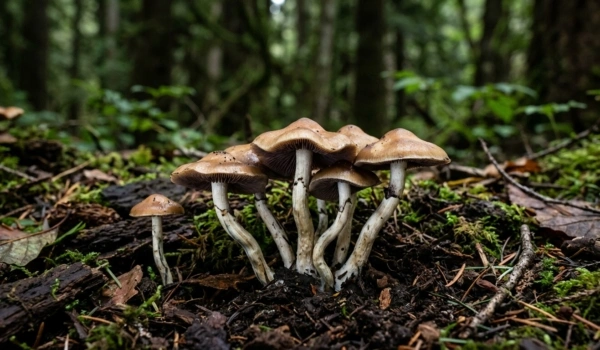
No mushroom species has been clinically proven to treat PTSD through microdosing. Psilocybe cubensis is the species most often mentioned in contemporary microdosing discussions and controlled mushroom studies, but that does not make it an evidence-based treatment for trauma.
| Mushroom or product | Main compounds | Evidence for PTSD | Important limitation |
|---|---|---|---|
| Psilocybe cubensis | Psilocybin and psilocin | No clinical evidence that microdosing treats PTSD | Potency can differ between strains, batches and individual mushrooms |
| Other Psilocybe species | Variable amounts of psilocybin and psilocin | No species has been established as more effective for PTSD | Uncertainty around potency, identification and predictable effects |
| Amanita muscaria | Muscimol and ibotenic acid rather than psilocybin | No reliable clinical evidence for PTSD treatment | Can cause poisoning, confusion, agitation, sedation and other unpredictable effects |
| Hericium erinaceus — lion’s mane | Non-psychedelic bioactive compounds | No clinical evidence that it treats PTSD | Preliminary research into mood or cognition is not evidence of PTSD treatment |
Psilocybe cubensis is relevant to the scientific microdosing literature because it has been used in controlled experiments. It should not be described as the “best mushroom for PTSD.” The available studies do not support that claim.
Other psilocybin-containing species should not be presented as stronger or more appropriate alternatives. Chemical content can differ between species, strains, growing environments, storage conditions and individual mushrooms. Two visually similar amounts of dried material may therefore contain different quantities of active compounds.
Why lion’s mane is a separate subject
Lion’s mane is a non-psychedelic mushroom. It does not contain psilocybin and does not produce the same acute psychological effects as psilocybin-containing mushrooms.
Small preliminary studies have explored possible effects of lion’s mane on mood, stress or cognitive performance. These findings do not demonstrate that lion’s mane treats PTSD, and they should not be used as evidence that combining lion’s mane with psychedelic microdosing improves trauma-related symptoms.
Why Amanita muscaria should not be grouped with psilocybin mushrooms
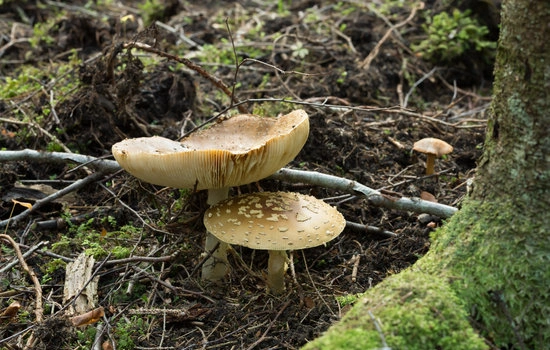
Amanita muscaria, commonly known as fly agaric, does not rely on psilocybin or psilocin as its primary psychoactive compounds. Its effects are mainly associated with muscimol and ibotenic acid.
Because its pharmacology, effects and toxicity risks differ from those of psilocybin mushrooms, evidence about psilocybin-assisted therapy cannot be applied to Amanita muscaria. It has no established clinical role in PTSD treatment.
Current Veteran-Focused Research and Access
More rigorous veteran-specific research is still needed. One notable registered study, NCT06853912, was designed as a Phase 2 randomized, double-blind, placebo-controlled trial with an open-label extension. It focuses on military veterans and first responders who have both PTSD and alcohol use disorder.
The study was designed to evaluate a 25 mg psilocybin dose with psychological support in approximately 40 participants. This population is clinically important because PTSD and problematic alcohol use can reinforce one another and complicate treatment.
The University of Washington study page states that recruitment closed on June 26, 2026. Registration of a trial does not show that a treatment works, and completion of recruitment does not mean that peer-reviewed results are available. Conclusions should wait for the study to be completed, analyzed and published.
The most recent recruitment notice is available on the official University of Washington study page.
Within the United States, psilocybin remains a Schedule I controlled substance at the federal level and is not an established treatment available through routine VA clinical care. The Veterans Health Administration does fund research into psychedelic compounds, but research participation is different from clinical approval or general access.
Legal rules vary between jurisdictions and may change. A regional regulated-access program does not mean that psilocybin has been approved as a treatment for PTSD, nor does it make unsupervised possession or use legal under every applicable law.
Safety Risks and Why Clinical Supervision Matters
The positive findings reported in clinical research came from carefully structured environments. Participants were screened for medical and psychiatric risks, prepared before administration, monitored for several hours and assessed afterward.
PTSD can involve intrusive memories, panic, hyperarousal, emotional numbing and dissociation. An intense psychedelic experience may temporarily amplify difficult emotions or traumatic material. Without appropriate support, these experiences may become destabilizing rather than therapeutic.
Veterans may also have overlapping conditions that affect safety, including:
- major depression or suicidal thoughts;
- alcohol or other substance-use disorders;
- traumatic brain injury;
- chronic pain;
- sleep disorders;
- cardiovascular conditions;
- complex medication regimens.
Possible medication interactions must be evaluated individually. People should not stop antidepressants, mood stabilizers or other prescribed medications in order to use psilocybin without guidance from a qualified clinician. Abrupt medication changes may carry risks of their own.
Long-term microdosing safety is also uncertain. Researchers have raised a theoretical cardiovascular concern involving repeated stimulation of the serotonin 5-HT2B receptor. Activation of this receptor by some other serotonergic drugs has been associated with valvular heart disease.
It has not been established that psilocybin microdosing causes cardiac fibrosis or heart valve disease in humans. The concern should therefore be described as theoretical rather than as a confirmed side effect. At the same time, the absence of long-term controlled data means habitual microdosing should not be presented as risk-free.
Clinical studies also use known doses of tested formulations. Dried mushrooms introduce additional uncertainty because their active-compound content may vary and incorrect species identification can create a poisoning risk.
The Bottom Line on Veterans, PTSD and Psilocybin
Psilocybin-assisted treatment is a promising but still experimental area of PTSD research. The first direct Phase 2 study in adults with diagnosed PTSD found that one supported 25 mg session was generally well tolerated and was associated with substantial reductions in symptom scores through 12 weeks. Its small size, open-label design and lack of a placebo group prevent firm conclusions about effectiveness.
Research involving veterans also shows encouraging signals, particularly for severe treatment-resistant depression. However, depression response and remission rates should not be presented as proof that psilocybin treats PTSD. Veteran-specific randomized evidence remains limited.
The available research does not show that microdosing Psilocybe cubensis or any other mushroom species reduces PTSD symptoms. Clinical studies use standardized psilocybin in controlled environments, while dried mushrooms vary in potency and informal microdosing lacks a validated PTSD treatment protocol.
Psilocybe cubensis is the mushroom most relevant to controlled microdosing research, but it is not a proven “PTSD mushroom.” Other Psilocybe species have no stronger condition-specific evidence, lion’s mane is non-psychedelic, and Amanita muscaria contains different psychoactive substances with a distinct and potentially toxic risk profile.
For veterans and other people living with PTSD, established trauma-focused treatments remain the most evidence-supported options currently available. Participation in an authorized clinical trial may provide access to experimental treatment under screening and professional supervision. Current findings justify further research, but they should not be interpreted as support for unsupervised psychedelic use or mushroom microdosing.