The chaga mushroom (Inonotus obliquus) is one of the best known natural adaptogens used in folk medicine and microdosing. Chaga is an inexpensive mushroom with a wide range of traditional and medicinal uses, including the treatment of cancer, diabetes and inflammatory diseases. It contains bioactive compounds (steroids, terpenoids) that have antioxidant, anti-inflammatory and anti-tumor properties.
The mushroom has a long history of use in medicine, rituals and even cosmetics. Its potential extends to the pharmaceutical, food and agricultural industries, but scientific research in these areas is limited. Further study of chaga may open up new perspectives in medicine and industry.
What does chaga look like and where does it grow?
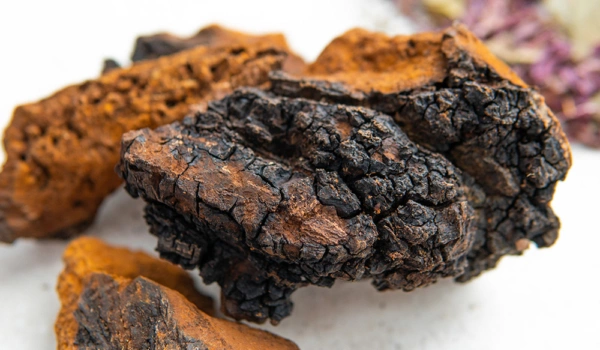
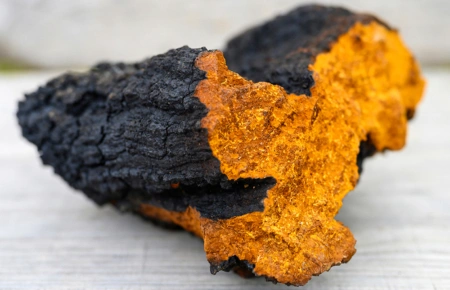
Chaga is a parasitic mushroom that grows on trees, mainly birch trees. It has a characteristic appearance:
- Shape: an irregularly shaped growth resembling a lump of coal.
- Color: black on the outside and brown-orange on the inside.
- Structure: hard, woody.

Habitats
Chaga is found in northern regions with temperate climates:
- Russia (Siberia, Urals, Karelia)
- Scandinavia
- North America
- China, Korea, Japan
It grows mainly on birch trees, less often on alder or rowan.

Chemical composition of chaga
Chaga is rich in bioactive substances that provide its beneficial properties. Main components:
| Component | Properties |
| Betulin | Anti-inflammatory, antioxidant effect |
| Polysaccharides | Immunomodulators, support of intestinal microflora |
| Phenols | Strong antioxidants that protect cells |
| Melanins | Skin support, antioxidant properties |
| Triterpenes | They improve metabolism, have an antiviral effect |
Why is chaga used in microdosing?
Microdosing chaga aims to gently support the body without drastic changes in the state of consciousness. It is valued for:
- Antioxidant properties – protecting cells from oxidative stress.
- Immune system support – due to polysaccharides and betulin.
- Stabilizing blood sugar levels is an important effect for metabolic health.
- Reducing inflammation – thanks to anti-inflammatory compounds.
- Nervous system support – improves concentration and resistance to stress.
How is chaga taken in microdosing?
There are several ways to consume it:
1. Tea (decoction)
- 1-2 g of dried mushroom per 200 ml of water.
- Simmer over low heat for 15-20 minutes.
- Use in the morning and afternoon.
2. Tincture
- Chaga is poured alcohol (40-50%) and insist 2-4 weeks.
- Take 5-10 drops 1-2 times a day.
3. Capsules or powder
- Dosage: 0.5-1 g per day.
- Drink with water or add to food.
4. chaga extract
- A more concentrated form.
- 250-500 mg per intake is sufficient.

Safety and possible risks of using chaga
The use of chaga has traditionally been considered safe, but scientific studies of its toxicology have yielded mixed results.
Some studies confirm the safety of the mushroom for both animals and humans. However Kooi et al. (2005) found that ethanolic extract of chaga had a toxic effect on keratinocyte cells at high concentrations (100-400 g/mL). Other studies(Glamočlija et al., 2015) showed that alcoholic and aqueous extracts had no significant effect on animal liver cells.
However, chaga contains oxalic acid, which can accumulate in the body and increase the risk of oxalate necrosis with long-term consumption, especially in predisposed individuals(Kikuchi et al., 2014; Lee et al., 2020).
Experts note that the composition of the mushroom depends on its growth environment, and safety studies require additional data. Strict quality control standards are needed before its widespread use in medicine.
Safe course of chaga intake
Chaga is a powerful natural adaptogen, so it is important to follow the dosage and regimen to get the benefits without side effects.
Recommended course of treatment
| Form | Dosage | Course of administration | Features |
| Tea (decoction) | 1-2 tsp. crushed chaga in 200-300 ml of water | 2-3 weeks, then a break of 1-2 weeks | Brew over low heat for 30-40 minutes |
| Tincture (alcoholic) | 20-30 drops 2 times a day | 1 month, then a break of 2-3 weeks | Dilute with water before use |
| Powder (capsules/extract) | 500-1000 mg per day | 3-4 weeks, then a break of 1 month | Take in the morning or afternoon |
Who should be careful?
- People with kidney disease (due to oxalate content).
- Taking chaga can lower sugar levels, so it is important for diabetics to control glucose.
- Pregnant and breastfeeding women are better to consult a doctor.
Conclusion
Chaga is a powerful natural adaptogen that can be used in microdosing to support health. It strengthens immunity, protects cells from aging and helps to cope with stress. However, it is important to consider possible contraindications and consult a doctor before starting to take it.
📌 Important: This article is for informational purposes only and does not constitute medical advice.