What Is Lion’s Mane Mushroom?
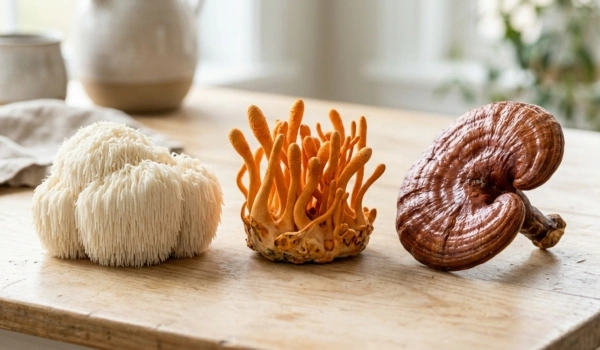
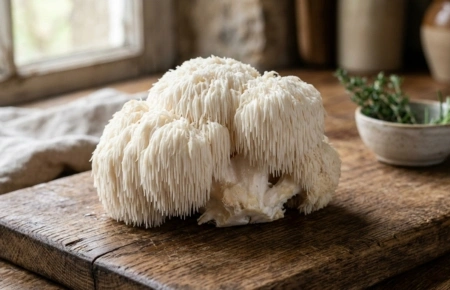
Lion’s mane (Hericium erinaceus) is a large, white, shaggy mushroom with a distinctive cascading appearance — its overlapping spines loosely resemble a lion’s mane, which explains the common name. It grows on hardwood trees across North America, Europe, and East Asia, and has a long history of culinary and traditional medicinal use in China, Japan, and Korea, where it has been prepared as food and used in herbal practice for centuries.
Today it is sold worldwide as a functional mushroom supplement — in capsules, powders, liquid extracts, and dried whole form. It is not related to psilocybin mushrooms or Amanita muscaria, and it has no psychoactive properties. It belongs to a different category entirely: an edible functional mushroom studied for its bioactive compounds and possible effects on cognition and immune function.
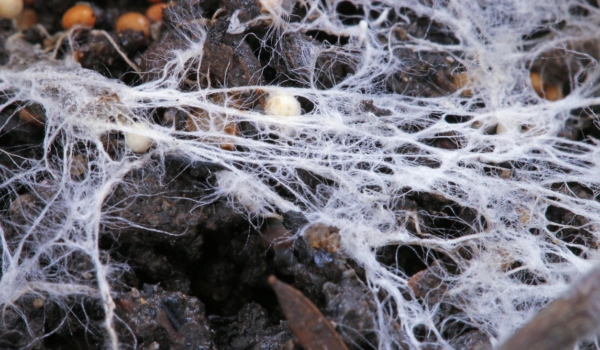
The fresh mushroom has a mild, somewhat seafood-like flavor and is used in cooking across East Asia. The supplement market uses both the fruiting body (the visible mushroom) and the mycelium (the root-like structure), and the distinction between these two sources matters when evaluating a product’s compound content — more on that in the buying section.
Key Bioactive Compounds: Hericenones, Erinacines, and Beta-Glucans
Hericium erinaceus contains two groups of compounds not found in other mushrooms: hericenones and erinacines. Their locations in the mushroom differ in a practically relevant way. Hericenones are found in the fruiting body, while erinacines are found in the mycelium.
Both compound groups have been shown in preclinical and in vitro studies to stimulate the synthesis of nerve growth factor (NGF) — a protein involved in the growth, maintenance, and survival of certain neurons. NGF plays a role in neuroplasticity, meaning the brain’s ability to form and reorganize connections. Erinacines, in particular, are small enough to cross the blood-brain barrier in animal models, which has made them a focus of neuroprotection research.
NGF stimulation observed in cell cultures and animal studies does not directly translate to a proven cognitive benefit in humans. The mechanism is biologically plausible and worth studying, but preclinical findings are not the same as clinical outcomes.
Beyond these two signature compounds, lion’s mane also contains beta-glucans — polysaccharides found in many functional mushrooms that are associated with immunomodulatory activity. Preclinical studies report antioxidant, anti-inflammatory, and antimicrobial properties as well. These findings form the basis for much of the supplement interest in Hericium erinaceus, though most evidence at this stage comes from laboratory and animal research.
What Research Has Looked At
The research picture for lion’s mane is active but still developing. The bulk of published work is preclinical — meaning cell culture experiments and animal studies — with a smaller body of human clinical data. Understanding which is which matters when evaluating any benefit claim.
Preclinical and laboratory findings
In vitro and animal studies have reported a range of effects: neuroprotective, anti-neuroinflammatory, antioxidant, antimicrobial, immunomodulatory, cognition-enhancing, wound-healing, and anti-gastric ulcer properties. These findings are consistent enough to explain the continued scientific interest, but they have not been validated at scale in human trials.
Human clinical studies
Human data exists but is limited in scope. Published clinical research has examined lion’s mane in older adults with mild cognitive impairment, individuals with mild Alzheimer’s symptoms, overweight adults, and menopausal women. Outcomes measured include memory function, mood, and measures of cognitive performance. Results from these studies suggest possible benefits in these populations, though the studies are generally small and the evidence is characterized as preliminary.
One double-blind pilot study in healthy young adults used 1.8 g per day over 28 days and found that participants reported subjective reductions in stress. Compliance was high at 96%, and tolerability was good. This type of study — short-term, small sample, self-reported outcomes — provides useful early data but not conclusive proof of effect.
There is also early clinical interest in gut health, with some research examining lion’s mane’s effects on gut microbiome diversity. This remains an exploratory area.
Across all human studies, research gaps remain significant: optimal dosing has not been established, long-term safety data in humans is limited, and potential interactions with pharmaceutical drugs have not been fully characterized. Large-scale randomized controlled trials are still needed before any of these findings can be treated as confirmed clinical benefits. The FDA has not approved lion’s mane for the treatment of any condition.
How to Take Lion’s Mane: Forms, Serving Sizes, and Practical Guidance
Hericium erinaceus is available in several supplement forms, each with practical differences in how they are used and what the label should tell you. There is no universally standardized dosage for lion’s mane supplements — the amounts used in clinical studies vary considerably depending on the study population, formulation, and duration.
Human studies have used a wide range: some trials used 250 mg of dry powder three times daily (750 mg/day), one pilot study used 1.8 g/day (three 600 mg capsules each morning after breakfast), and some research has explored ranges up to 3–5 g/day. These figures reflect study protocols, not medical recommendations or officially established doses. No single amount has been validated as the correct dose for any specific purpose.
| Form | How it is typically used | What to check on the label | Practical note |
|---|---|---|---|
| Capsules | Fixed serving size; convenient for daily use | Serving size in mg; whether it is extract or whole powder; source (fruiting body, mycelium, or both) | Easier to track amounts used in a given day |
| Powder | Mixed into drinks, smoothies, or food | Whether it is a concentrated extract or raw dried powder; beta-glucan percentage if listed | Serving sizes vary widely by product; a scoop is not standardized |
| Liquid extract (tincture) | Measured in drops or ml; taken directly or added to a drink | Extraction method; concentration per ml; alcohol content if relevant | Concentration varies significantly between products |
| Whole dried mushroom / tea | Used in cooking or steeped as a tea | No standardized active compound content | Useful as a food source; bioactive compound levels are variable and not measured on food labels |
One practical detail from clinical research: in the 1.8 g/day pilot study, capsules were taken in the morning after breakfast, and this timing was associated with high tolerability. This is study-specific context, not a universal rule, but it suggests that taking the supplement with food may reduce the chance of gastrointestinal discomfort.
Anyone taking prescription medications, managing a chronic health condition, or who is pregnant or breastfeeding should speak with a healthcare provider before adding lion’s mane to their routine. Supplement serving sizes and label claims are not reviewed by the FDA for accuracy or effectiveness.
Side Effects and Who Should Use Caution
Lion’s mane is generally well tolerated in short-term clinical studies, but it is not without risk, and “natural” does not mean universally safe.
Adverse effects reported in clinical studies include abdominal discomfort, nausea, and skin rash. Allergic reactions are a documented concern — including potentially severe reactions — particularly in people with known mushroom allergies or sensitivities. Anyone who develops hives, difficulty breathing, or other signs of a systemic allergic response after taking lion’s mane should stop use and seek medical attention.
There are also theoretical drug interactions that have not been fully studied in humans but warrant caution:
- Anticoagulants (blood thinners): lion’s mane may have antiplatelet effects that could theoretically increase bleeding risk
- Antidiabetic drugs: some preclinical data suggest possible blood sugar-lowering effects, raising the risk of hypoglycemia when combined with diabetes medications
- Immunosuppressants: given the immunomodulatory activity seen in preclinical work, concurrent use with drugs that suppress immune function warrants medical review
The following groups should consult a healthcare provider before using lion’s mane supplements:
- People with mushroom allergies or a history of mold or fungal sensitivities
- Those taking anticoagulants, antidiabetic medications, or immunosuppressants
- Pregnant or breastfeeding individuals (safety data in these populations is not available)
- People with autoimmune conditions or upcoming surgery
The FDA has not reviewed lion’s mane supplements for safety or effectiveness. Unlike pharmaceutical drugs, no regulatory agency has assessed whether a product on a store shelf is safe, effective, or accurately labeled. Patients should inform their healthcare providers about any supplements they are taking.
How to Choose a Quality Lion’s Mane Supplement
With a largely unregulated supplement market, knowing what to look for on a label matters more than brand recognition.
Fruiting body vs. mycelium
Hericenones are found in the fruiting body; erinacines are found in the mycelium. Some products use only one source, some use both. A label that does not specify which part of the mushroom was used leaves you without key information about which compounds are present. Products made primarily from mycelium grown on grain substrates may also contain significant amounts of grain starch, which dilutes the active mushroom content — though this is rarely disclosed prominently.
Extract vs. whole powder
Extracts are typically more concentrated than whole dried mushroom powder. An extraction ratio (such as 8:1 or 10:1) indicates how much raw material was used to produce the extract, but these ratios are not regulated and cannot be assumed to guarantee a specific active compound level. More informative is a label that discloses the percentage of beta-glucans or specifies active compound content — this is a stronger quality marker than an extraction ratio alone.
Third-party testing
Because supplements are not pre-approved by the FDA, independent third-party testing is the most reliable way to verify that a product contains what the label says and is free from contaminants such as heavy metals or pesticides. Look for certifications from recognized testing organizations listed on the product label or the brand’s website.
Health claims on the label
Supplement labels in many markets are permitted to carry structure/function claims such as “supports cognitive health,” but these are not evaluated or verified by the FDA and are not equivalent to clinically proven medical benefits. No lion’s mane supplement is approved to treat, diagnose, or prevent any disease. Treat ambitious claims on packaging with skepticism, and rely on the ingredient information rather than marketing language when making a purchasing decision.
Since optimal dosages remain undefined and long-term safety data in humans is still limited, starting with a well-labeled product from a manufacturer that provides third-party testing results is a reasonable baseline — regardless of what the front of the package promises.