
What Is Chaga Mushroom Coffee?
Chaga mushroom coffee is a beverage blend that combines regular coffee with extract or powder from Inonotus obliquus, the chaga mushroom. Because mushroom powder contains no caffeine, a typical one-to-one blend delivers roughly half the caffeine of a standard cup of coffee — which is one of the main practical reasons people seek it out.
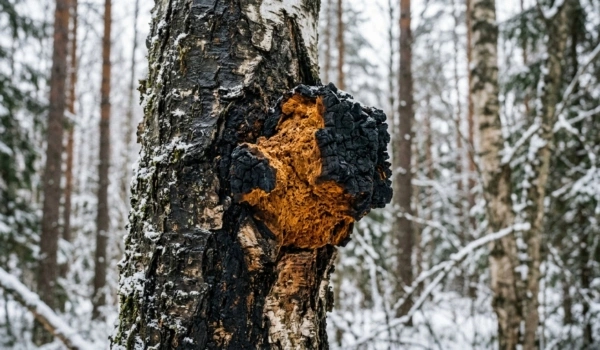
Chaga is a fungus that grows on birch trees across the Northern Hemisphere, particularly in Siberia, Northern Europe, and Canada. It does not look like a typical mushroom: it forms as a dark, woody mass on birch bark and is harvested, dried, and processed into a fine powder or concentrated extract. Chaga is a functional, non-psychedelic mushroom — it has no connection to psilocybin mushrooms or Amanita muscaria and is sold legally as a dietary supplement ingredient in most countries.
People in Russia and Northern Europe have consumed chaga in herbal teas for hundreds of years, valuing it primarily for immune support. During World War II, it was used in Finland as a coffee substitute when conventional coffee was scarce. Modern chaga mushroom coffee blends take a similar idea further by combining the mushroom with actual coffee to create a lower-caffeine functional beverage.
In terms of flavor, chaga powder has a mild, slightly earthy and bitter taste that blends relatively smoothly with coffee without dramatically altering its profile. Most people describe the result as tasting close to regular coffee — earthy and slightly woody rather than distinctly mushroom-like.
Reported Benefits of Chaga Mushroom Coffee
Chaga mushroom coffee is primarily chosen for its antioxidant content, reported immune-support properties, and the practical advantage of delivering less caffeine than regular coffee. The bioactive compounds most often associated with these effects are beta-glucans, polysaccharides, and a range of antioxidants found in chaga extract.
Beta-glucans are a type of polysaccharide studied across various mushrooms for their potential to support immune function. In chaga specifically, beta-glucans and other polysaccharides are thought to interact with immune system receptors in ways that may support the body’s natural defenses. These associations come from early research rather than large-scale human trials, but they form the basis of the immune-support claims on most product labels.
Chaga extract contains high levels of antioxidants compared to many other foods, which is often highlighted in the context of reducing oxidative stress. Early laboratory research has also suggested potential anti-inflammatory properties, though these findings come from cell studies rather than clinical trials in people.
One area of early animal research found that chaga extract appeared to protect liver tissue from a specific type of oxidative damage, suggesting possible hepatoprotective properties. This is a preliminary finding and has not been replicated in human studies.
The reduced caffeine profile is a concrete, practical benefit that does not depend on clinical proof — it is simply a result of the blend ratio. For people who are caffeine-sensitive but want to keep a coffee ritual, or who want to reduce caffeine intake without switching to decaf, chaga mushroom coffee offers a straightforward middle ground.
What Does the Science Actually Say?
Most of the evidence behind chaga mushroom coffee benefits comes from in vitro studies and animal studies, not from human clinical trials. Understanding what kind of research supports a health claim matters when deciding how much weight to give it.
In vitro studies test the effects of a compound on cells in a controlled laboratory setting. Animal studies test effects in mice or rats. Both research types can reveal how a substance behaves biologically and help researchers identify promising compounds worth studying further. However, results from these studies do not automatically translate into the same effects in humans — the dose, form of delivery, and how the human body processes the compound can all differ substantially.
As of 2024–2025, robust human clinical trials specifically on chaga mushroom coffee or chaga extract remain limited. The immune-support and anti-inflammatory associations discussed in product marketing are largely drawn from in vitro and animal literature, not from large-scale randomized controlled trials in people.
The early science is genuinely promising rather than absent. Animal studies have shown results consistent with immune modulation and antioxidant activity. The liver-protection finding — where chaga extract appeared to reduce liver tissue damage in an animal model — is a specific, measurable result that warrants further investigation. The gap is not between chaga having no biological activity and having some; the gap is between early mechanistic findings and confirmed clinical outcomes in humans.
Chaga mushroom coffee is a functional beverage backed by traditional use and promising early research, but not yet by the kind of human clinical evidence that would support medical claims. For most people choosing it as a lower-caffeine daily drink with potential added benefits, that is a reasonable position to hold.
How to Use Chaga Mushroom Coffee: Forms and Serving Guidance
Chaga mushroom coffee comes in several product formats, and the right choice largely depends on how you already make your coffee and how much control you want over the blend ratio. No standardized clinical dose for chaga mushroom coffee has been established through human trials, so serving guidance should always follow the product label rather than general internet recommendations.
| Product Form | How It Is Typically Used | What to Check on the Label | Practical Note |
|---|---|---|---|
| Instant blend (sachet or jar) | Mixed with hot water like instant coffee; no brewing required | Serving size, chaga extract amount per serving, added ingredients or sweeteners | Most convenient; blend ratio is pre-set by the manufacturer |
| Ground coffee mix | Brewed in a coffee maker, French press, or pour-over like regular ground coffee | Coffee-to-mushroom ratio, extract type (powder vs. dual-extract), serving size | Closest to a regular coffee experience; flavor profile varies by brand |
| Chaga powder add-in | Stirred or blended into your own brewed coffee at home | Extract concentration, recommended amount per cup, extraction method stated | Allows full control over ratio; dual-extract powders typically yield more bioavailable compounds |
| Chaga extract capsules with coffee | Capsule taken alongside your regular coffee | Milligrams of extract per capsule, standardization for beta-glucans if listed, daily serving | Keeps coffee and supplement separate; useful if you want precise mushroom intake without altering coffee taste |
When reading a chaga mushroom coffee label, look for whether the product uses a raw powder or a concentrated extract, and whether the extraction method is listed. Dual-extraction products — which use both water and alcohol extraction — are generally considered more thorough at drawing out both water-soluble (polysaccharides) and non-water-soluble (triterpenes) compounds. Some products also list a beta-glucan percentage, which gives a clearer indication of potency than weight alone.
Because chaga mushroom coffee contains caffeine from the coffee component, timing considerations are similar to regular coffee: most people find consuming it in the morning or early afternoon works best. People with health conditions, those taking prescription medications, and those who are pregnant or breastfeeding should consult a qualified healthcare provider before adding chaga mushroom coffee to their routine.
Safety, Side Effects, and Who Should Be Careful
Most healthy adults tolerate chaga mushroom coffee well, and the beverage is widely consumed without reported issues among people who have no underlying health conditions or relevant medications. That said, specific groups need to weigh some real considerations before using it regularly.
Medication interactions. Chaga may lower blood pressure and blood sugar levels. For most people this is not a concern, but for anyone already taking blood pressure medications, diabetes medications, or blood thinners (anticoagulants), combining these drugs with chaga could amplify the medication’s effect in unpredictable ways. If you use any of these prescription drugs, speaking with a healthcare provider before using chaga mushroom coffee is a genuine safety step, not optional caution.
Kidney and oxalate risk. Chaga is naturally high in oxalates, compounds that can contribute to the formation of calcium oxalate kidney stones. People with kidney disease or a personal or family history of kidney stones should be cautious about regular chaga consumption and should discuss it with a doctor or dietitian before starting.
Gastrointestinal sensitivity. Mushroom extracts contain complex carbohydrates that can be difficult for some people to digest. Gas, bloating, or digestive discomfort is possible, particularly for people with irritable bowel syndrome (IBS) or other gastrointestinal conditions. Starting with a smaller serving to assess tolerance is a sensible approach for anyone with a sensitive digestive system.
Pregnancy and breastfeeding. There is insufficient human safety data on chaga use during pregnancy or breastfeeding. People who are pregnant or breastfeeding should avoid chaga mushroom coffee or consult a healthcare provider before using it.
| Group | Specific Concern | Recommended Action |
|---|---|---|
| People on blood pressure medications | Chaga may lower blood pressure; additive effect possible | Consult healthcare provider before use |
| People on diabetes medications | Chaga may lower blood sugar; risk of hypoglycemia if combined | Consult healthcare provider before use |
| People taking anticoagulants (blood thinners) | Chaga may interact with anticoagulant medications | Consult healthcare provider before use |
| People with kidney disease or kidney stone history | High oxalate content may increase kidney stone risk | Exercise caution; seek medical advice |
| People with IBS or gastrointestinal conditions | Hard-to-digest carbohydrates may cause gas and bloating | Start with a small serving; monitor tolerance |
| Pregnant or breastfeeding individuals | Insufficient safety data for these populations | Avoid or consult a healthcare provider |
For healthy adults with no relevant medications or conditions, chaga mushroom coffee is a reasonable choice as a lower-caffeine functional beverage. The practical decision is whether the combination of reduced caffeine, traditional use, and promising early research aligns with what you are looking for — with a clear understanding that human clinical confirmation for most specific health claims is still a work in progress. Reviewing the current evidence on mushroom coffee and speaking with a healthcare provider if any of the risk factors above apply is a practical starting point before making it part of a daily routine.