What Are Fruiting Bodies and Mycelium in Mushroom Supplements?
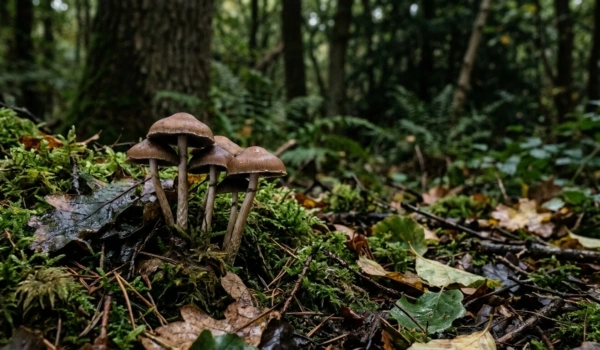
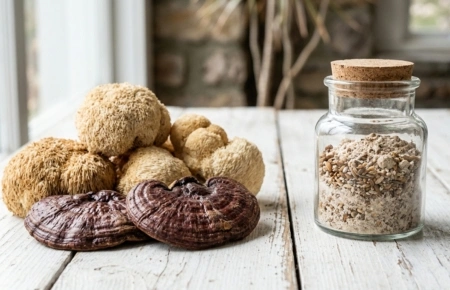
Fruiting body and mycelium supplements contain fundamentally different parts of the fungus, and that biological difference directly affects what compounds you are buying. Fruiting bodies are the above-ground reproductive structures — the visible mushroom cap and stem. Mycelium is the underground, root-like network from which fruiting bodies grow. Both can be dried, extracted and sold as supplements, but they do not share the same compound profile, and the production method for each introduces distinct quality considerations.
One notable exception is chaga. Chaga does not produce a conventional fruiting body the way lion’s mane or reishi does. The part harvested from birch trees is a sclerotia — a dense, hardened mass of fungal tissue sometimes called a conk. Chaga’s bioactive compounds, including its triterpenes and polysaccharides, are extracted from this sclerotia rather than a true fruiting body or mycelium.
For most other functional mushroom species, the fruiting body vs. mycelium question is a genuine quality decision. Understanding which part the supplement is made from — and how it was grown — is the first step in evaluating any mushroom supplement label.
How Compound Profiles Differ: Beta-Glucans, Triterpenes, and Unique Mycelium Metabolites
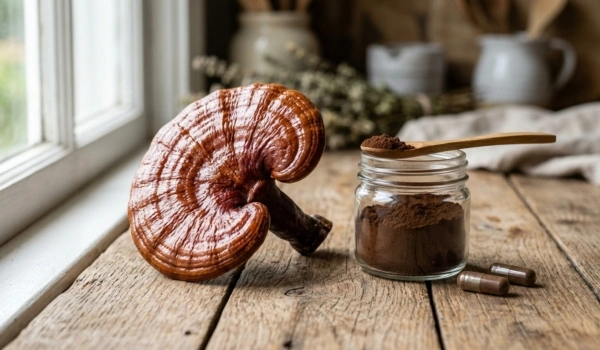
Fruiting bodies and mycelium are not interchangeable sources of the same compounds. Fruiting bodies contain higher concentrations of beta-glucans and polysaccharides — the primary bioactive compounds that most immune-support mushroom supplements are formulated around. They also contain species-specific triterpenes: reishi fruiting bodies, for example, are the primary source of the ganoderic acids that distinguish reishi supplements from generic polysaccharide powders.
Mycelium has a different compound profile. It is richer in ergosterol (a precursor to vitamin D), lovastatin and other secondary metabolites not concentrated in fruiting bodies. These are not insignificant compounds, but they represent different targets than the beta-glucans a buyer seeking immune support is likely prioritizing.
A higher beta-glucan percentage on a fruiting body label reflects what is measurably in the product. Whether a specific beta-glucan level produces a specific health outcome in a specific person is a separate and more complex question that current research has not fully resolved for most use cases. Compound presence and proven clinical benefit are not the same thing.
| Compound | Found in Fruiting Body | Found in Mycelium | Notes |
|---|---|---|---|
| Beta-glucans | High concentration | Lower concentration | Primary target for immune-support supplements; fruiting body is the stronger source |
| Polysaccharides | High concentration | Present but often diluted by grain substrate | Dilution risk is significant in mycelium-on-grain products |
| Triterpenes (e.g., ganoderic acids) | Present — species-specific (reishi, chaga) | Minimal or absent | Critical for reishi identity; not well-represented in mycelium extracts |
| Ergosterol (Vitamin D precursor) | Low | Higher concentration | Mycelium advantage; relevant for vitamin D conversion potential |
| Lovastatin | Minimal | Present | Found in mycelium; note interaction potential with statin medications |
| Vitamin D | Low unless UV-exposed | More concentrated | Mycelium contains more; not the primary reason most buyers choose mushroom supplements |
The Mycelium-on-Grain Problem: Starch Dilution and What It Means for Quality
Analysis of commercial mycelium-on-grain products has found starch content in the range of 35–40%, closely tracking the nutritional profile of the grain substrate itself rather than fungal biomass. This is the most concrete quality concern in the mycelium supplement category, and it affects value for money more directly than any other variable.
Commercial mycelium supplements grown on grain substrates — rice, barley, oats or wheat — cannot be fully separated from the material they colonize. The result is a product that may contain as much grain as mycelium, with starch content in the 35–40% range, compared to near-zero starch in a genuine fruiting body extract.
The production economics explain why this happens. Growing mycelium on grain is fast, inexpensive and scalable. Fruiting bodies grown on wood logs require significantly more time and controlled conditions. Manufacturers choosing the mycelium-on-grain route are not necessarily cutting corners by industry definition, but buyers should understand that the cost saving comes with a compound-concentration trade-off.
When a mycelium-on-grain supplement lists its total weight or serving size, a meaningful portion of that weight is grain starch, not fungal compounds. A 500 mg capsule of mycelium-on-grain material is not comparable to a 500 mg capsule of a fruiting body hot-water extract. The beta-glucan concentration per gram is substantially lower in the mycelium-on-grain product, even before extraction efficiency is factored in.
This does not mean every mycelium product is ineffective. It means that mycelium products without transparent substrate disclosure — and without analytical data confirming beta-glucan percentage — are difficult to evaluate fairly. Substrate separation technology exists and some producers use it, but it is not the industry standard for most commercial mycelium supplements.
When Mycelium May Have the Edge: Lion’s Mane Research and Species-Specific Cases
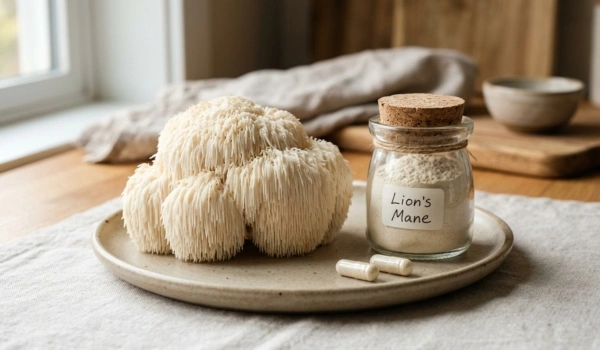
The fruiting-body-wins framing is accurate for many mushroom species, but it does not hold uniformly across the entire category. Lion’s mane (Hericium erinaceus) is the clearest exception, and it matters enough to change the decision for buyers specifically interested in cognitive or neuroprotective applications.
A comparative study examining the neuroprotective effects of lion’s mane fruiting body versus mycelium found that the mycelium appeared more effective at protecting nerve cells than the fruiting body. This is a single study result, not an established medical consensus, and it should not be read as proof that lion’s mane mycelium treats neurological conditions. It does suggest, however, that for lion’s mane specifically, mycelium is not categorically the inferior choice — and that the compounds responsible for the neuroprotective activity observed in that study may be more concentrated in the mycelium fraction.
The broader point is species-specificity. Lion’s mane mycelium findings do not translate to reishi, chaga, cordyceps or turkey tail. Each mushroom species has a distinct compound fingerprint, and the fruiting body vs. mycelium comparison plays out differently depending on which species is under discussion. Applying the lion’s mane mycelium finding to reishi — where triterpenes are the primary active compounds and are concentrated in the fruiting body — would be a category error.
Lion’s mane mycelium also contains ergosterol, lovastatin and vitamin D at higher concentrations than fruiting bodies. For buyers seeking these specific compounds rather than beta-glucans or triterpenes, mycelium may be the more relevant source — provided the product is made from genuine mycelium biomass with minimal grain dilution. Some manufacturers address this by offering combination products that include both fruiting body and mycelium, which can provide a broader compound spectrum when substrate and extraction quality are transparent.
How to Read a Mushroom Supplement Label: What to Check Before You Buy
Label scrutiny matters for both fruiting body and mycelium supplements. A 2017 report published in Nature tested 19 batches of reishi supplements and found that only five actually contained what was stated on the label. That finding applied across supplement types and underscores that the fruiting body vs. mycelium decision is only useful if the label is accurate in the first place.
Specific checkpoints worth applying before purchasing any mushroom supplement:
- Beta-glucan percentage disclosed: A quality supplement label states the beta-glucan content as a percentage of total weight. If the label lists only total polysaccharides without a beta-glucan breakdown, the bioactive content is harder to verify — starch is also a polysaccharide and would inflate the total figure.
- Substrate disclosed: For mycelium products, the growing substrate should be named. If the label does not state whether the mycelium was grown on grain or a non-grain medium, treat that as a missing quality signal.
- Extraction method stated: Hot-water extraction is standard for beta-glucans; dual extraction (hot water plus ethanol) is used for triterpenes. A label that does not mention extraction method may indicate a raw powder rather than a concentrated extract.
- Third-party testing seal: Independent verification — from NSF, USP or a named analytical laboratory — indicates that label claims have been checked externally. This does not guarantee efficacy, but it is the clearest available signal of label accuracy for supplements.
- Latin species name: The label should use the full binomial species name (e.g., Ganoderma lucidum for reishi, Hericium erinaceus for lion’s mane) rather than a common name alone, since common names can apply to multiple related species with different compound profiles.
Fruiting body supplements grown on wood logs are more costly to produce than mycelium-on-grain products, and that cost difference is typically reflected in the price. A low-cost reishi or lion’s mane product with no substrate disclosure and no beta-glucan percentage warrants closer scrutiny before purchase.
Which Should You Choose? A Practical Decision Framework
The right choice depends on the specific mushroom species, your intended use and the transparency of the product — not on a single rule that applies across the entire category.
If your goal is standardized immune support using reishi, chaga or turkey tail: fruiting body is the stronger choice. These species concentrate their key bioactive compounds — beta-glucans and triterpenes — in the fruiting body. A hot-water or dual-extracted fruiting body product with a stated beta-glucan percentage is the most verifiable option for this intent.
If your goal is lion’s mane for cognitive or neuroprotective support: mycelium or a combination product is worth considering. The species-specific comparative study result suggests mycelium may be the more relevant fraction for neuroprotective applications with lion’s mane. Look for a mycelium product with explicit substrate disclosure and confirmed low starch content — or a combination product that includes both fractions with transparent extraction data.
If you are evaluating a mycelium-on-grain product for any species: check whether the substrate is disclosed and whether beta-glucan content is stated as a percentage of total weight. Starch content in the 35–40% range substantially dilutes fungal compound concentration. Without substrate transparency, a mycelium product cannot be evaluated on the same terms as a fruiting body extract.
If you are considering a combination formula: the broader compound spectrum is potentially useful, but only if the product discloses the ratio of fruiting body to mycelium, the substrate used for the mycelium component and the extraction method for each fraction. Combination labeling without this detail makes it difficult to assess whether you are getting meaningful amounts of either.
People taking prescription medications — particularly statins, immunosuppressants or anticoagulants — should consult a qualified healthcare professional before adding any mushroom supplement, as some compounds in these products, including lovastatin found in mycelium, may interact with medication. The same applies to those who are pregnant, breastfeeding, managing a chronic health condition or scheduled for surgery.