How Microdosing Dosages Are Defined Across Substance Categories
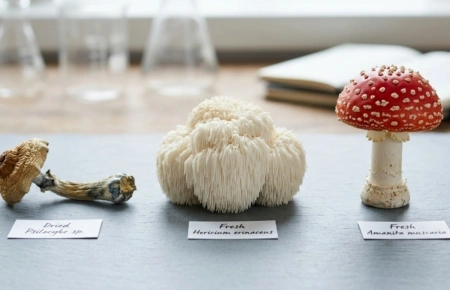
A microdose is conventionally defined as approximately 1/10 to 1/20 of a full recreational or therapeutic dose — enough to produce a subtle physiological effect without a perceptual high. This article compares reported and studied dosage ranges across three distinct categories: psilocybin mushrooms, lion’s mane (Hericium erinaceus) as a functional supplement, and Amanita muscaria. These three are not interchangeable — they differ fundamentally in legal status, active compounds, mechanism of action, evidence base and safety profile.
Psilocybin mushrooms are a controlled psychedelic substance in most jurisdictions. Lion’s mane is a legal dietary supplement with clinical trial data. Amanita muscaria contains muscimol and ibotenic acid — compounds with a completely different pharmacology from psilocybin — and carries serious toxicity risks. Grouping them under one label because all three involve mushrooms is a meaningful error that affects both safety and legal exposure.
Psilocybin Mushroom Microdosing Dosage: Research Context and Legal Status
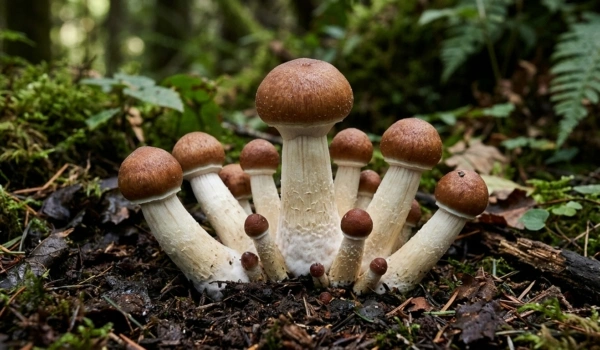
The community-reported psilocybin microdosing dosage range is approximately 0.1 to 0.3 grams of dried magic mushrooms per dose. This represents roughly 5 to 10 percent of a standard recreational dose, which is typically considered to be 2 to 3 grams of dried material. In formal research settings, investigators work with pure psilocybin rather than dried mushrooms, and microdose amounts in those studies are generally in the range of 1 to 2 mg of the isolated compound.
These figures come from community consensus and controlled research contexts — they are not medical recommendations and should not be read as instructions for self-administration. The distinction between 0.1 g and 0.3 g of dried mushrooms may sound small, but variability in psilocybin content between mushroom batches means that consistent dosing is practically difficult outside of controlled pharmaceutical settings.
On the evidence side, early enthusiasm for microdosing’s cognitive benefits has not been consistently supported by controlled research. A randomized controlled trial referenced by Harvard Health involving 34 patients found that low-dose psilocybin produced some subjective effects — participants felt something — but showed no objective evidence of improvements in creativity, well-being or cognitive function. That finding does not close the question, but it does establish that subjective experience and measurable outcome are not the same thing.
Psilocybin can also produce physiological tolerance relatively quickly, meaning that repeated use at the same dose may produce diminishing responses. This is one reason structured protocols in research settings involve carefully spaced administrations rather than daily use.
Psilocybin is classified as a Schedule I controlled substance in the United States and is similarly restricted in most countries. The only legal access in the US exists through highly regulated clinical research programs. Possession, sourcing and preparation carry real legal risk that varies by jurisdiction.
Lion’s Mane (Hericium erinaceus) Dosage: Clinical Ranges and Supplement Forms
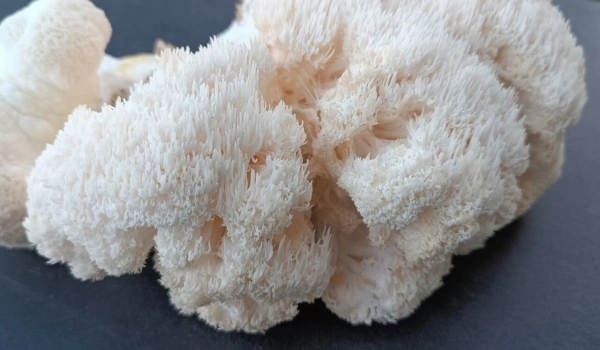
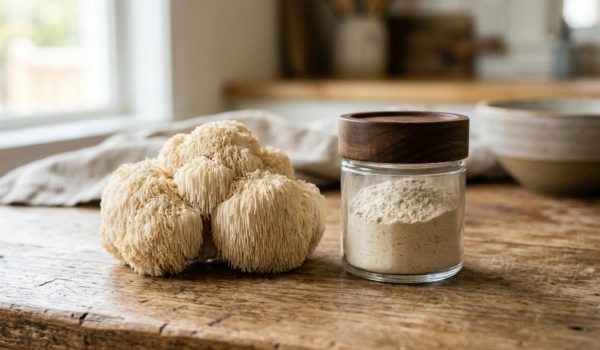
Lion’s mane is a legal functional mushroom supplement, not a psychedelic — it contains no psilocybin, muscimol or other controlled compounds. Clinical studies on lion’s mane have used daily dosages ranging from 1,050 mg to 3,000 mg, typically divided into three to four doses per day. These figures come from human trials, not anecdotal community data.
A double-blind, placebo-controlled pilot study (PMC10675414) used 1.8 g of Hericium erinaceus daily for 28 days in healthy adults aged 18 to 45. Researchers found faster cognitive performance at 60 minutes after dosing and a trend toward reduced stress scores after 28 days. A 2025 study published in Frontiers in Nutrition used 3 grams of extract equivalent to 30 grams of fresh fruiting body — a higher dosage than most prior trials — and noted that the optimal dose for cognitive support remains uncertain.
Form matters when comparing these numbers. Whole mushroom powder and concentrated extract are not directly equivalent on a gram-for-gram basis. A 500 mg capsule of a 10:1 extract represents a very different amount of active material than 500 mg of plain dried mushroom powder. When reading a lion’s mane product label, it is worth checking whether the serving size refers to whole mushroom powder or an extract, and whether beta-glucan content or active compound concentration is specified.
Lion’s mane does not treat, cure or prevent any medical condition. The clinical data points to a possible support role for cognitive performance and stress response in healthy adults — effects that are modest, short-term in measurement, and not yet established as consistent across different populations or supplement forms.
Amanita muscaria and Muscimol Microdosing: Reported Ranges, Toxicity and Key Risks
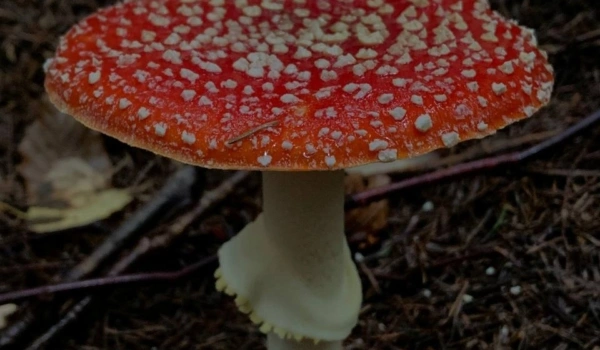
Amanita muscaria contains two pharmacologically distinct active compounds: muscimol and ibotenic acid. These are not related to psilocybin or serotonin pathways. Muscimol acts as a GABA-A receptor agonist — its primary effect is sedating and dissociative. Ibotenic acid is its neurotoxic precursor, a compound considered toxic by the FDA, and is present in significant amounts in fresh or improperly prepared material.
According to a 2026 narrative review, psychedelic effects in adults occur after approximately 6 mg of muscimol or 30 to 60 mg of ibotenic acid orally. A single fresh Amanita muscaria fruiting body weighing 50 to 70 grams may contain up to 70 mg of ibotenic acid — placing a whole fresh cap near or above the threshold for toxic neurological effects in a single specimen. Approximately 5 to 12.5 grams of dried material has the potential to produce psychedelic effects based on estimated muscimol content after preparation.
Community reports describe an Amanita muscaria microdose as approximately 0.5 to 1 gram of dried cap material, or 1 to 2 mg of isolated muscimol. These figures are unvalidated community data. No clinical trials exist to support any specific microdosing range for Amanita muscaria, and no research consensus on what constitutes a safe sub-threshold dose has been established. The gap between a reported microdose (0.5–1 g dried) and the threshold for psychedelic or toxic effects (5–12.5 g dried) may appear wide, but mushroom-to-mushroom variability in ibotenic acid and muscimol content makes any estimate imprecise.
Drying and heat do convert some ibotenic acid into muscimol, which shifts the compound profile toward a less neurotoxic state. This does not eliminate ibotenic acid from the material, and the conversion rate depends on time, temperature and moisture — variables that are difficult to control outside of laboratory conditions.
Amanita muscaria is not a legal alternative to psilocybin. Its legal status varies by jurisdiction and is not uniformly permissive. Its risk profile is distinct and, in several respects, less understood than that of psilocybin.
Safety, Contraindications and Drug Interactions by Category
Psilocybin mushrooms
The most immediate risk for psilocybin is legal: possession and use carry criminal penalties in most jurisdictions. Beyond legality, psilocybin use is not advisable for people with a personal or family history of psychosis, schizophrenia or other serious mental health conditions. Drug interaction data for psilocybin is limited, particularly for serotonergic medications such as SSRIs and MAOIs. Anyone taking psychiatric medication should consult a qualified clinician before any exposure, given the serotonergic mechanism involved.
Lion’s mane (Hericium erinaceus)
Lion’s mane is generally well tolerated in healthy adults at the dosages used in clinical studies. Known cautions include potential allergic reactions in people sensitive to fungi or mushrooms, a theoretical interaction with anticoagulant medications based on animal data, and uncertainty around use during pregnancy and breastfeeding. People with upcoming surgery, chronic health conditions or those taking blood thinners should discuss lion’s mane use with a healthcare provider before starting.
Amanita muscaria
Amanita muscaria carries the most serious and specific contraindications of the three categories. Absolute contraindications include pregnancy, breastfeeding, active seizure disorders, and severe liver or kidney disease. Because muscimol is a GABA-A receptor agonist, it potentiates benzodiazepines, alcohol, barbiturates and other CNS depressants — combinations that can produce dangerous respiratory and neurological depression. Anyone taking medications in these classes faces compounded risk that is not manageable through dose adjustment alone.
Across all three categories, consulting a qualified healthcare professional before use is the only way to assess individual risk given medical history, current medications and jurisdiction-specific legal status.
Quick Reference: Dosage Comparison Table for All Three Categories
The table below summarizes reported or studied dosage ranges, evidence level, legal status and key caution for each category covered in this article.
| Category | Reported or Studied Dosage Range | Evidence Level | Legal Status | Key Caution |
|---|---|---|---|---|
| Psilocybin mushrooms | 0.1–0.3 g dried mushrooms (community); ~1–2 mg pure psilocybin (research) | Early-stage RCTs; no objective cognitive benefit confirmed in one 34-patient trial | Schedule I in most jurisdictions; US access restricted to regulated research only | Legal risk; mental health history; serotonergic drug interactions; tolerance develops |
| Lion’s mane (Hericium erinaceus) | 1,050–3,000 mg daily in clinical studies; optimal dosage not established | Multiple double-blind trials; promising but not conclusive; form and extract ratio matter | Legal dietary supplement in most countries | Fungal allergy; anticoagulant caution; not for pregnancy or breastfeeding without medical advice |
| Amanita muscaria | 0.5–1 g dried cap material (anecdotal); 1–2 mg muscimol (anecdotal); no validated clinical range | No clinical microdosing trials; community-reported only; toxicity thresholds established in narrative review | Jurisdiction-dependent; not uniformly legal | Ibotenic acid is neurotoxic (FDA); GABA-A agonist interaction with CNS depressants; contraindicated in seizure disorders, pregnancy, liver or kidney disease |
This table is for educational reference only and does not constitute medical advice or a recommendation to use any of these substances.
What is the difference between a psilocybin microdose and a lion’s mane supplement dose?
A psilocybin microdose — approximately 0.1 to 0.3 g of dried mushrooms — is a sub-perceptual amount of a controlled psychedelic compound that acts on serotonin receptors. A lion’s mane supplement dose — typically 1,050 to 3,000 mg daily — is a serving of a legal functional mushroom that contains no psychedelic compounds and has a completely different pharmacological target. The term “microdose” does not apply to lion’s mane in the same way; lion’s mane dosage is a supplement serving defined by clinical studies and product labels.
Is Amanita muscaria microdosing legal?
Amanita muscaria legal status varies significantly by country and sometimes by region within a country. It is not uniformly legal, and in some jurisdictions its active compound muscimol occupies a regulatory gray area rather than a clearly permitted status. Ibotenic acid is considered toxic by the FDA. Anyone considering use should verify local law independently, not assume legality based on the fact that the mushroom grows wild or is sold in some markets.
How do I know which dosage source to trust?
For lion’s mane, clinical trial data published in peer-reviewed journals — such as studies using 1.8 g or 3 g daily in controlled conditions — provides the most reliable dosage context. For psilocybin, research protocol figures (1–2 mg pure psilocybin) are more reliable than community-reported dried mushroom weights, which vary with potency. For Amanita muscaria, no validated clinical dosage source exists — any figure described as a microdose is community-reported and unverified. Across all three, a qualified healthcare professional is the appropriate person to consult before making any personal decision, particularly if medications, health conditions or legal questions are involved.
Evidence for all three categories continues to develop at an uneven pace — lion’s mane has the most human trial data, psilocybin research is accelerating in regulated settings, and Amanita muscaria remains largely unstudied in controlled microdosing contexts. Understanding what each category actually contains, what dosage ranges have been observed in research or community use, and what risks are specific to each substance is the most practically useful starting point.