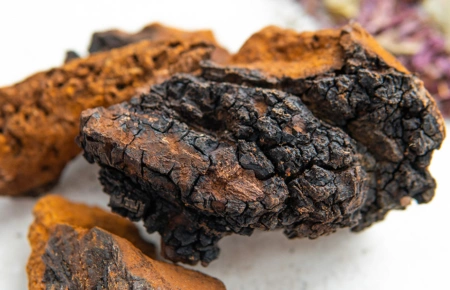
The chaga mushroom (Inonotus obliquus) is a parasitic fungus that grows in cold climates, mainly on birch trees in Siberia, Northern Europe, North America and Northern China. It is widely used in folk medicine and in recent years has become the subject of scientific research due to its health benefits.
Chaga is rich in bioactive compounds such as polysaccharides, polyphenols, triterpenes and melanin. Below we take a simple look at what exactly makes this mushroom so special.
1. – Antioxidant properties
| Исследование | Results |
| Mishra et al. (2012) | Chaga polyphenols actively fight free radicals. |
| Kim et al. (2011) | Chaga extracts protect cells from oxidative stress. |
Chaga contains powerful antioxidants including polyphenols, melanin, and the enzyme superoxide dismutase (SOD), which help neutralize free radicals and protect cells from damage.
2. Immune system support
Chaga can strengthen the immune system due to its content of beta-glucans, which stimulate macrophages and help the body fight infections more actively.
| Research | Results |
| Kim et al. (2005) | Chaga polysaccharides enhance immune response and cytokine production. |
| Park et al. (2004) | The level of interferon, a substance with antiviral action, increases. |
3. Anti-inflammatory action
Anti-inflammatory effectsChaga helps reduce inflammation in the body by inhibiting active inflammatory molecules such as nitric oxide (NO) and TNF-alpha.
| Research | Results |
| Song et al. (2008) | Chaga reduces NO production in inflammation. |
| Cui et al. (2005) | Reduces levels of TNF-α and IL-6, key markers of inflammation. |
4. Potential protection against cancer
Some components of chaga, such as betulinic acid and triterpenes, can inhibit the growth of cancer cells and trigger their self-destruction (apoptosis).
| Research | Results |
| Shishkina et al. (2006) | Betulinic acid derivatives induce apoptosis in cancer cells. |
| Zjawiony et al. (2004) | Chaga triterpenes inhibit cancer cell growth under laboratory conditions. |

5. Blood sugar control
Chaga may be beneficial for diabetes and prediabetes, as its polysaccharides help to better regulate sugar levels and increase insulin sensitivity.
| Research | Results |
| Yun et al. (2009) | Chaga lowers blood sugar levels in diabetic rats. |
| Zhang et al. (2011) | Insulin sensitivity is increased. |
6. Liver protection
Thanks to antioxidants and triterpenes, chaga may help protect the liver from toxins and oxidative stress.
| Research | Results |
| Lee et al. (2009) | Chaga extract protects liver tissue from damage. |
| Liu et al. (2012) | Levels of liver enzymes indicating inflammation are reduced. |
7. Skin benefits: melanin
Melanin from chaga helps protect the skin from ultraviolet light and other harmful environmental factors. Chaga can also slow down the aging of the skin.
| Research | Results |
| Inoue et al. (2013) | Chaga melanin blocks UV radiation. |
| Yonei et al. (2011) | Reduces oxidative damage to skin cells. |

8. D-fraction of chaga: enhanced effect
The special part of chaga known as the D-fraction consists of beta-glucans and triterpenes. It is being actively researched as a potential remedy to support the immune system and fight tumors.
| Research | Reluts |
| Chen et al. (2010) | D-fraction activates macrophages and T cells. |
| Jung et al. (2011) | D-fraction triterpenes kill cancer cells in the lab. |
Conclusion
The chaga mushroom is a truly impressive natural remedy that can support health on multiple levels, from immune defense to helping fight inflammation and even cancer. Although more human clinical studies are needed, the existing data is encouraging. Chaga has the potential to become a valuable element in both traditional and modern medicine.
Important: be sure to consult your doctor before using any mushroom supplements.